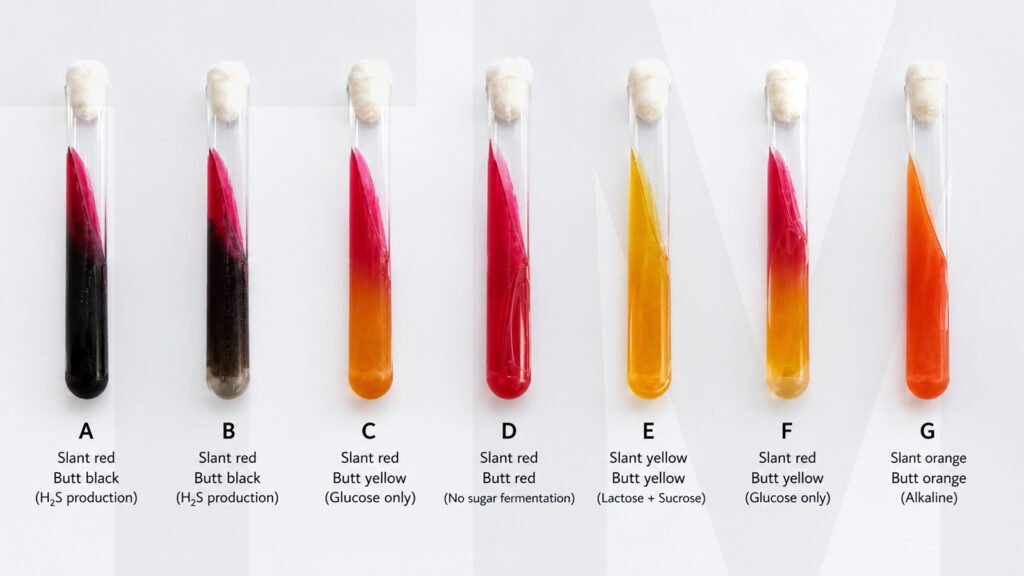
A microbiologist often looks beyond what appears on a culture plate. A tiny change in colour can reveal an important microbial reaction.
Imagine a freshly inoculated tube sitting inside an incubator. The medium initially appears the same. After incubation the colours tell a different story.
These changes can be used to observe how a microorganism uses certain carbohydrates. They can also show gas production and hydrogen sulphide formation. These reactions are used in the tsi test to help differentiate bacteria.
Triple Sugar Iron Agar creates a useful setting for observing these biochemical changes. Its slant and butt also provide different conditions for the interpretation of microbial activity.
The tsi test is a biochemical test which is used to study the carbohydrate fermentation in microorganisms. It uses triple sugar iron agar as the testing medium.
Triple Sugar Iron Agar is a differential medium with glucose, lactose and sucrose. It also contains peptones, a pH indicator, and ingredients for detecting hydrogen sulphide production.
The medium allows microbiologists to examine several characteristics within one tube. These include carbohydrate utilization, gas formation, and hydrogen sulphide production.
The test therefore provides a biochemical reaction pattern that can support bacterial differentiation. Microbiologists usually interpret this pattern alongside other identification tests.
The principle depends on carbohydrate fermentation and the resulting change in acidity. Bacteria that ferment carbohydrates produce acidic end products.
These products lower the pH of the medium. Phenol red acts as the pH indicator and changes from red toward yellow under acidic conditions.
Glucose occurs at a lower concentration than lactose and sucrose. This difference helps distinguish glucose fermentation from fermentation of the other sugars.
The Triple Sugar Iron Test also detects hydrogen sulphide formation. Iron-containing components react with hydrogen sulphide and produce a visible blackening.
Gas production can create cracks, bubbles, or lifting within the medium. Therefore, one tube can provide several useful observations.
The physical design of the medium plays an important role in interpretation. The tube contains both a slant and a deep butt.
The slant provides greater exposure to oxygen. The butt provides comparatively reduced oxygen conditions.
This arrangement allows microbiologists to observe fermentation patterns across different parts of the medium. It also helps distinguish surface reactions from deeper reactions.
The TSI Slant therefore forms an important part of the test setup. Proper inoculation helps create a clear reaction pattern throughout the medium.
Reading only one section can lead to an incomplete interpretation. Microbiologists should examine both the slant and butt after incubation.
The procedure begins with a suitable bacterial culture and a prepared triple sugar iron agar tube. A sterile inoculating needle usually performs the inoculation.
The needle first enters the butt through a straight stab. The inoculator then streaks the surface of the slant.
This method introduces the microorganism into both sections of the medium. The inoculated tube then undergoes incubation under appropriate laboratory conditions.
After incubation, the microbiologist observes the colour of the slant and butt. The observer also checks for gas formation and blackening.
Careful inoculation remains important because the reaction depends on growth throughout the medium. Proper observation also supports reliable interpretation.
The TSI test produces characteristic reaction patterns. Microbiologists commonly describe these reactions using alkaline and acidic symbols.
An acidic reaction appears as A, while an alkaline reaction appears as K. The symbols describe the condition of the slant and butt.
An A/A reaction indicates acid production in both sections. This pattern generally indicates glucose fermentation with lactose or sucrose fermentation.
The K/A reaction shows an alkaline slant and an acidic butt. This pattern suggests glucose fermentation with no lactose or sucrose fermentation.
A K/K reaction indicates an alkaline reaction in both sections. It indicates that the tested carbohydrates were not fermented.
Gas production may appear through cracks, bubbles, or displacement of the agar. Blackening indicates hydrogen sulphide production.
The tsi test therefore combines several observations instead of relying on colour alone.
The TSI biochemical test provides information about how a microorganism handles selected carbohydrates. It also provides evidence of gas and hydrogen sulphide production.
These reactions form a biochemical profile of the organism being tested. During identification, microbiologists can compare the profile with other characteristics.
The TSI test microbiology workflow becomes especially useful when several organisms show similar growth characteristics. Biochemical reactions may provide further information for differentiation.
However, one test rarely provides complete identification. Microbiologists should interpret TSI reactions alongside other appropriate tests and observations.
This approach reduces the risk of dependence on one biochemical property.
The tsi test has multiple uses in routine microbiological identification. It is useful in differentiating bacteria on the basis of carbohydrate fermentation pattern.
It is often used by microbiologists working with enteric and other Gram-negative bacteria. The test is useful in differentiating organisms that produce different biochemical reactions.
It also serves to demonstrate fundamental concepts related to microbiology in educational environments. Students can observe fermentation, acid formation, gas production and hydrogen sulphide production.
The test also supports broader identification workflows in microbiology. Researchers and laboratory professionals can combine its results with additional biochemical and cultural characteristics.
A small colour change can carry valuable information about microbial behaviour. The tsi test turns these changes into an interpretable biochemical pattern.
Its three sugars reveal fermentation capabilities. Its indicator shows acid production, while the medium can reveal gas and hydrogen sulphide formation.
The slant and butt further improve the value of the observation. Together, these features make TSI Agar useful for bacterial differentiation.
Understanding the principle also makes result interpretation easier. With careful inoculation and observation, this test can be a valuable part of microbiological identification workflows.
A. TSI Agar cannot identify species in a definitive manner on its own. Microbiologists use its pattern of reaction along with other biochemical, morphological, or identification tests.
A. TSI Agar is a medium for bacteria differentiating, with particular application to related bacterial identification processes.
A. Blackening is a sign of H2S production. The hydrogen sulfide reacts with the iron salt in the medium and a dark precipitate is formed.
A. It indicates that the organism can produce hydrogen sulphide in the test condition.
A. The tsi test is primarily a qualitative biochemical test based on visible reactions.
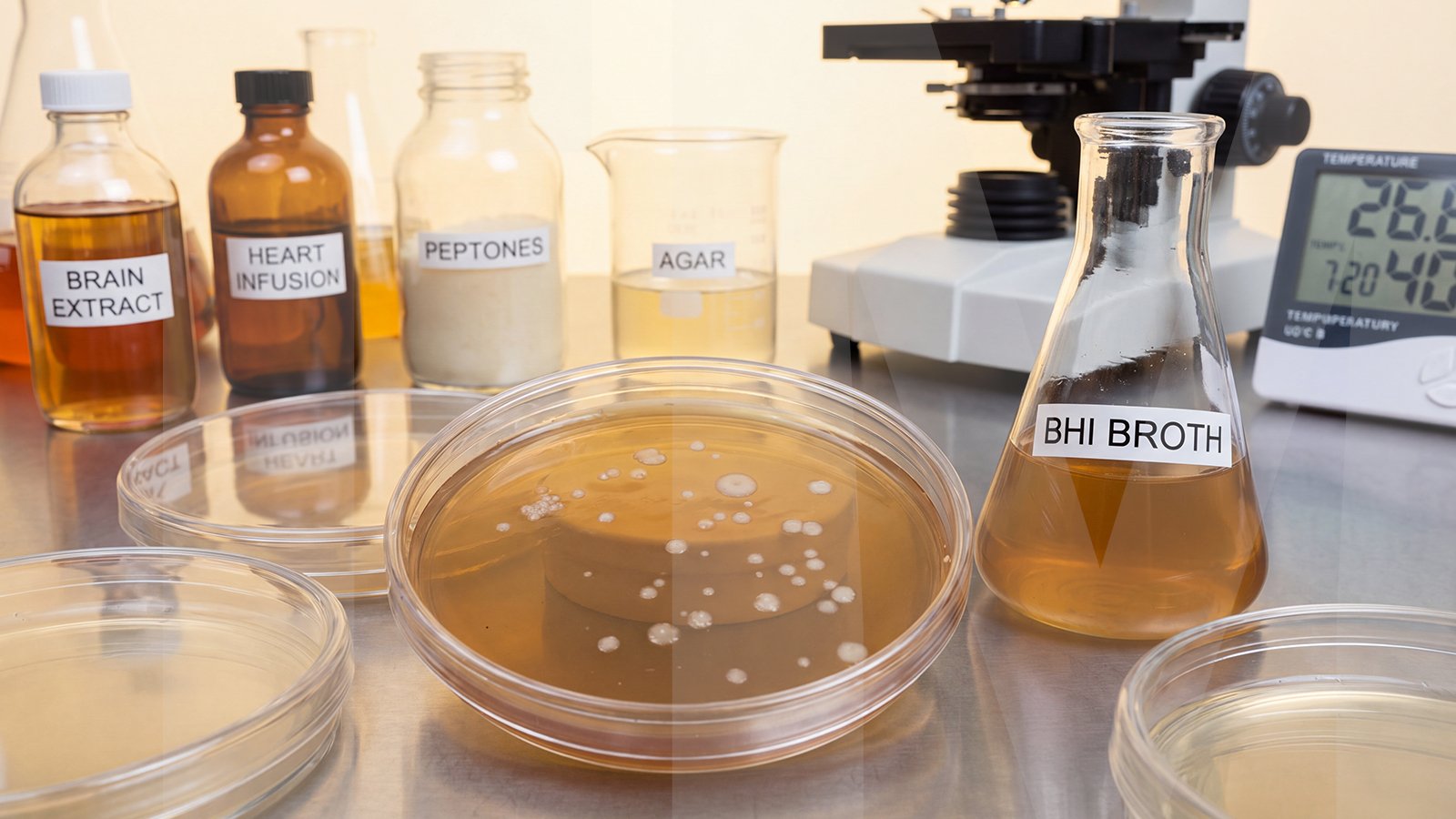
A colony appearing on an agar plate may look like a simple result. Yet, that small colony reflects everything the...
Read More
A microbiologist receives a mixed sample and prepares a fresh culture plate. The next question seems simple: which organism will...
Read More
A microbiologist opens two Petri plates after incubation. Both plates contain the same sample. One plate shows clear, well-separated colonies....
Read More
When a microorganism moves from the laboratory to commercial biofertilizer production, one question becomes particularly important: what will you use...
Read More
Every morning the microbiology lab receives fresh agar plates from the incubator. Each plate carries dozens of tiny bacterial colonies....
Read More
How can I help you today?
