A patient undergoes treatment for a bacterial infection, expecting the prescribed antibiotic to help. However, the antibiotic prescribed might not work, either because the bacteria is resistant to that drug or because it is not suitable for the organism causing the infection. In such cases, choosing another drug requires more than simply trying a different option.
An antibiotic sensitivity test helps in this case to determine which of the available antibiotics will weaken the action of a particular bacterium. This procedure is performed in the laboratory under strictly controlled conditions. The results of the study are useful evidence when selecting treatment. However, the value of these findings depends on the testing method, laboratory conditions, and correct interpretation.
The antibiotic sensitivity test is a test used to determine how well a particular antibiotic will inhibit bacteria from growing in certain environments. This test can help to determine which antibiotics would be effective and which would not be effective against an isolated organism.
This is one of the antibiotic resistance tests, but the terminology does not always describe exactly the same activities. Susceptibility testing tells you how the bacteria would react against a particular drug while other tests look for specific resistance mechanisms. In AST microbiology personnel perform the test, identify the microorganisms and apply the right procedure.
Different methods can be used to assess the susceptibility of a microorganism to a certain antibiotic. The method will depend on the type of organism being tested, the type of antibiotic and what question needs to be answered clinically. Two common methods are disc diffusion and dilution testing.
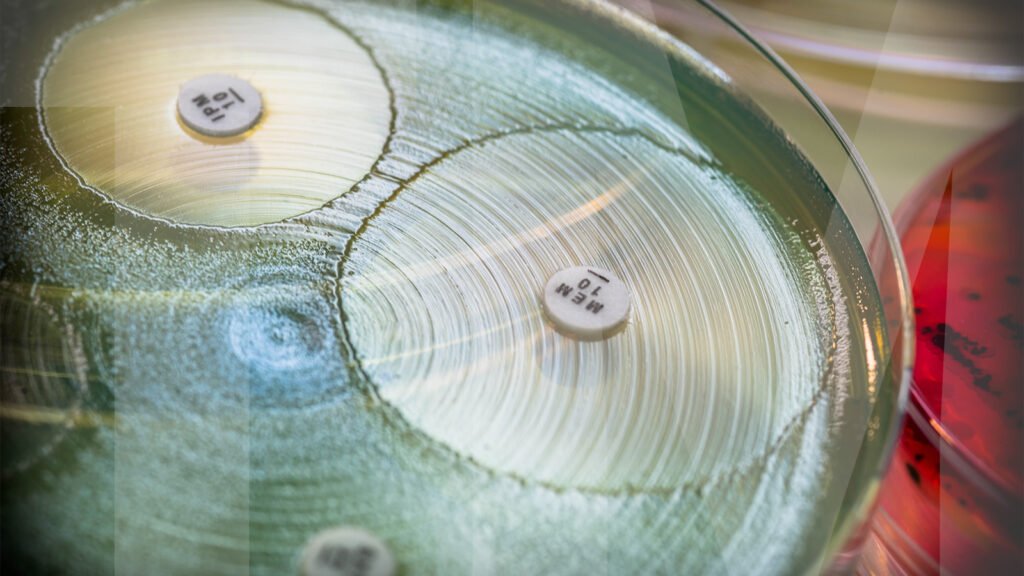
Disc diffusion involves placing a standard suspension of bacteria onto an appropriate agar plate. Paper discs with measured amounts of antibiotics are placed on the agar. During incubation, each antibiotic diffuses through the medium. If they inhibit the growth of bacteria, then a zone of inhibition will appear around the disc.
During dilution methods the bacteria will be exposed to varying concentrations of antibiotics in either broth or agar. Staff will be able to find out the minimum concentration required to prevent visible growth of bacteria; this is known as the minimum inhibitory concentration (MIC). Some protocols can also be used to find the minimum bactericidal concentration; this is the amount of a substance needed to kill a microorganism under defined conditions.
The results obtained from these methods will differ; disc diffusion gives inhibition zones, whereas dilution methods give a concentration. It is important that laboratories follow the recommended methods and standards for susceptibility testing.
A large clear zone doesn’t necessarily mean the antibiotic will treat the infection successfully. The staff measures the zone in millimetres and interprets it according to their interpretive criteria for the organism and antibiotic. These criteria are used to classify the isolate as susceptible, intermediate or resistant, according to the relevant standard.
The MIC results must be interpreted carefully. A low MIC may not be equivalent for different organisms and antibiotics. Therefore, staff evaluates the measurement against established breakpoints rather than evaluating it alone. Clinicians will consider the result within the context of the site of infection, dose, patient variables, and prevailing treatment guidance.
Antibiotic sensitivity tests therefore help support treatment decisions rather than guarantee that the infection will be cured. Laboratory findings simply describe how bacteria respond under defined conditions. The outcome of treatment can be influenced by the condition of the patient and the ability of the drug to reach the site of infection.
There are several conditions of testing that can affect the accuracy of an antibiotic sensitivity test. Too many or too few bacteria in the inoculum can cause variation in the zone of inhibition. The diffusion of antibiotics through the medium can also be affected by incorrect agar depth.
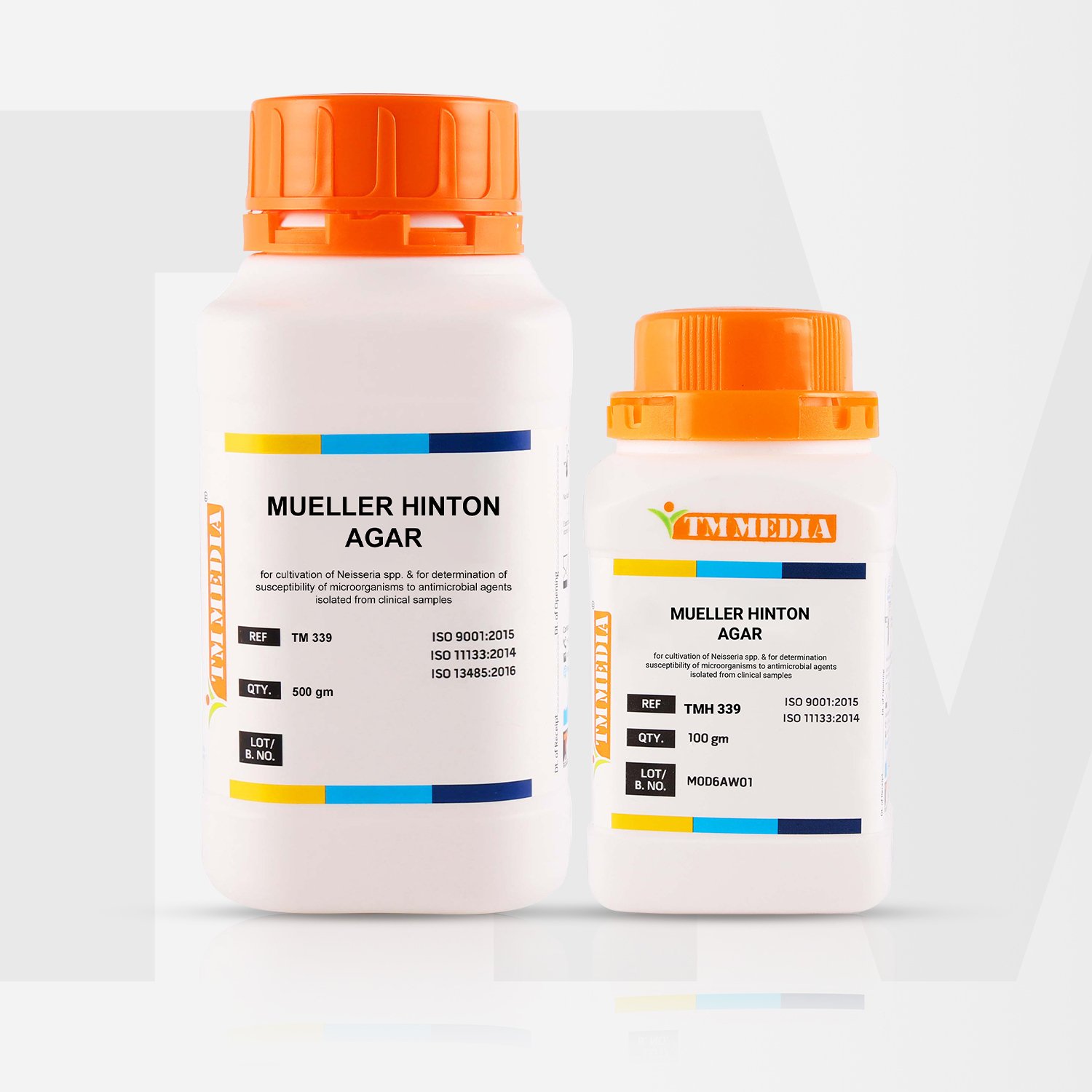
The media used must be appropriate to the organism and testing being carried out. Mueller Hinton Agar allows for susceptibility testing of many non-fastidious organisms. However, due to variations in the media composition and pH, laboratories must follow the method’s specifications.
The strength of the discs and how they are stored also matter. Discs that have expired or been stored incorrectly will not contain the expected amounts of antibiotics. The correct temperature, atmosphere and time of incubation must be used for the organism and method. Using quality control strains means laboratories can ensure the materials and methods are performing within expected limits.
Interpretation criteria require equal attention. Standards may change as new evidence becomes available. Laboratories should follow current guidelines for the organism and antibiotic. Even careful testing cannot correct an unsuitable method or an outdated breakpoint.
Proper selection of media and antibiotic discs helps in standardising the process of antibiotic sensitivity testing. Mueller Hinton Agar (TM 339) is a medium used for determining susceptibility of bacteria to antimicrobial agents. Ready-to-Use Mueller Hinton Agar Plates (TMP 005) are convenient to use for performing disc diffusion methods. Antibiotic sensitivity discs are supplied with small quantities of antimicrobial agents for testing.
The agar will allow the growth of bacteria while the diffusion of antibiotics through the agar and the discs will provide specific antimicrobials. However, choosing the right products alone does not ensure valid results. The laboratory must also control inoculum preparation, incubation, measurement and quality checks. Always follow the manufacturer’s instructions and applicable test standards.
A reliable antibiotic sensitivity test is more than just looking at how the bacteria grows around the antibiotic disc. The result is affected by the testing procedure, the medium used, the preparation of the bacterial sample, the conditions of incubation and the interpretation of the results. Laboratories can make results more consistent by using proven procedures and checking quality control results. When clinicians consider these test results along with the patient’s condition, susceptibility testing helps them choose the best antibiotic for treatment.
A. Previous antibiotic treatment may in some cases lower the amount of bacteria that can be recovered from a clinical specimen. This may impact the laboratory’s ability to isolate the organism required for susceptibility testing.
A. No. Susceptibility testing is also done in veterinary, research and other microbiology settings.
A. Pure culture is used to ensure that the obtained result is due to the bacterial isolate under test.
A. This test may be requested by a clinician who needs susceptibility data to help select antibiotics to treat a bacterial infection.
A. Yes. Some resistance genes can be transferred between bacteria by horizontal gene transfer.
Two bacterial colonies can appear nearly indistinguishable on an agar plate. Yet their metabolic activities can expose significant differences. A...
Read More
A microbiologist studies a bacterial culture that looks no different from many others. Yet, its metabolic capabilities may be an...
Read More
A small tube sits on a microbiologist’s bench, looking almost ordinary. Its orange medium waits for one biological event to...
Read More
A microbiologist often looks beyond what appears on a culture plate. A tiny change in colour can reveal an important...
Read More
A colony appearing on an agar plate may look like a simple result. Yet, that small colony reflects everything the...
Read More
How can I help you today?
