
A water quality laboratory receives samples taken from different points of a distribution network.
The testing team shall determine whether the water meets the microbiological quality requirements. Visual inspection cannot provide that answer, so the samples move to microbiological examination.
The laboratory examines these samples for microorganisms such as coliforms to assess their microbiological quality.
Water-quality monitoring laboratories use different methods to detect and estimate indicator organisms such as coliforms. And one of the commonly used approaches is the MPN method.
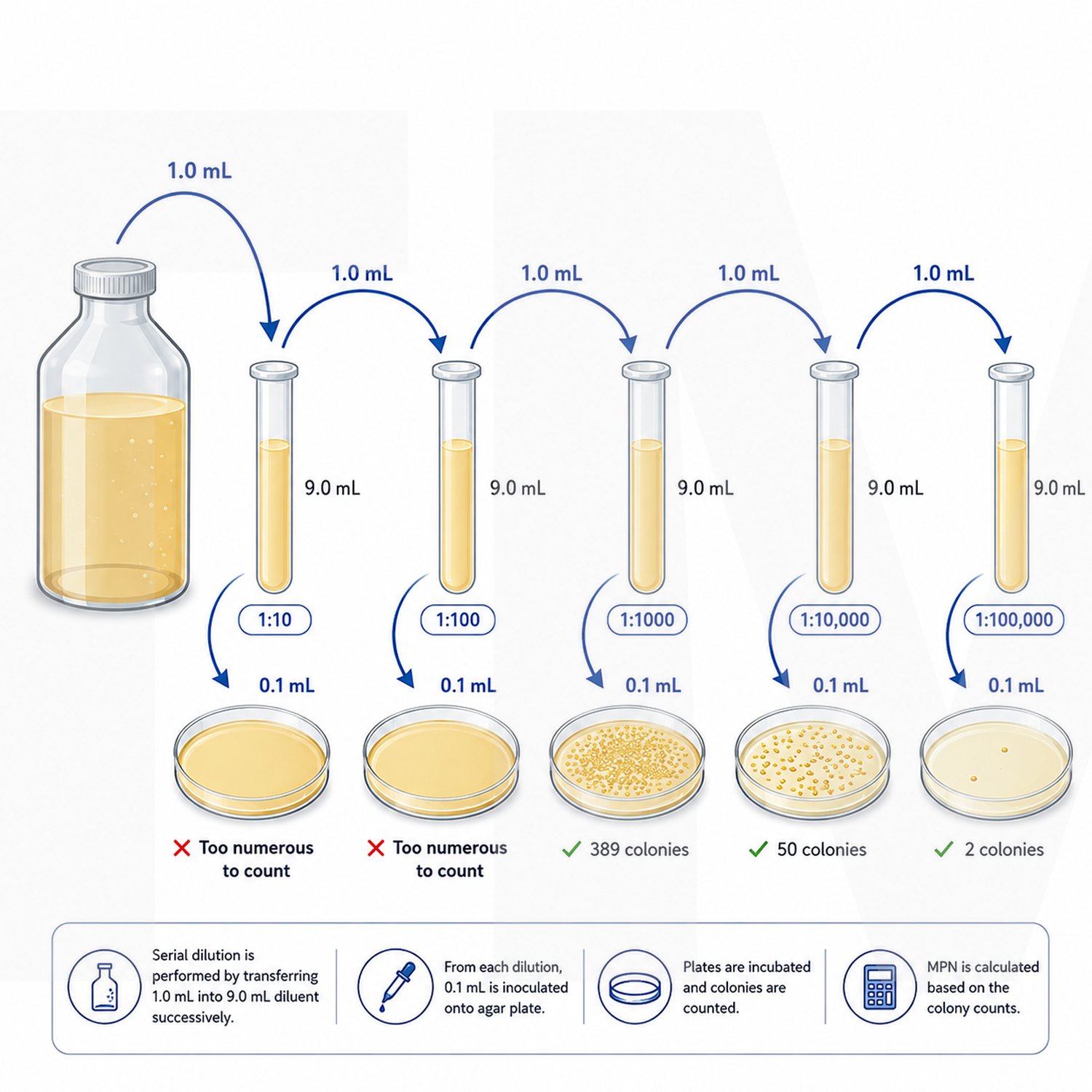
The MPN test, or Most Probable Number method, is a statistical method used to estimate the concentration of viable coliforms based on the results obtained from a series of inoculated tubes. This method involves using various sample volumes or dilutions to produce multiple test groups.
After incubation, each tube is examined for the reaction specified by the test method and recorded as positive or negative. Microbiologists record these reactions and use the positive-tube pattern to estimate the microbial concentration.
This method does not provide a direct count of individual bacteria or colonies. Instead, it provides a statistical estimate based on the pattern of positive and negative reactions.
For water analysis, laboratories commonly express the result as MPN per 100 ml. The MPN full form in water remains the same.
The first stage screens the water sample for possible coliform bacteria. Laboratories distribute measured sample volumes into several tubes containing a suitable broth.
In traditional multiple-tube coliform procedures, Lactose Broth with Durham tubes may be used to detect gas production resulting from lactose fermentation.
Where gas production is the specified positive reaction, gas in the Durham tube is recorded as a presumptive positive result. The laboratory keeps a record of the positive tubes for each volume or dilution of sample.
A presumptive positive reaction does not by itself confirm the presence of coliforms. Positive tubes are therefore subjected to the appropriate confirmation procedure specified by the method.
In the second phase, the presumed positive reactions are examined more closely. Microbiologists take culture from positive tubes into a suitable confirmatory broth.
In procedures that use Brilliant Green Lactose Bile Broth (BGLB), presumptive-positive cultures are transferred to BGLB and incubated under the specified conditions. Growth with gas production provides a confirmed positive reaction according to the test method.
After incubation, the tubes are examined for the reactions specified by the method, such as growth and gas production. If the reaction is positive, it means that there are coliform bacteria in the original sample.
The confirmed test reduces the chance of interpreting unrelated reactions as coliform contamination.
Where required by the selected method, culture from confirmed-positive tubes may be transferred onto a suitable selective or differential agar medium. EMB Agar may be used in appropriate procedures to examine the colony characteristics of coliform organisms. After incubation, the colonies are examined for their characteristic appearance, and additional identification tests may be performed where required. Microbiologists streak the culture and incubate the plate under appropriate conditions.
They then examine the colonies that have grown for characteristic appearance. Further tests can be performed in laboratories to confirm the identity of the organism where possible.
This stage connects the positive broth reaction with observable colony characteristics.
The MPN method uses the number of positive tubes from each dilution to estimate the microbial concentration. Microbiologists first record the positive results from the different tube groups.
For example, if three tubes are used at each of three sample volumes or dilution levels, the laboratory may obtain a positive-tube pattern such as 3-2-1. This combination is then compared with the MPN table applicable to that particular test configuration.
The corresponding table value provides a statistical estimate of the concentration of coliforms in the original sample. Laboratories then report the result according to the requirements of the selected method.
Because the result is statistically derived, MPN values are associated with uncertainty and should be interpreted according to the method and its reporting requirements. Microbiologists should therefore interpret it within the method’s stated limits.
The MPN test supports microbiological examination across several applications. Water testing laboratories use it for coliform examination in drinking water and other water samples.
Food laboratories can use MPN procedures on wastewater and other selected food and beverage samples. These tests help laboratories investigate coliform contamination and assess microbiological quality.
Environmental laboratories can use the method for wastewater and other samples that require indicator-organism testing. Public health laboratories can also use coliform results during water quality monitoring.
The method can be particularly useful when a multiple-tube estimation approach is appropriate for the sample and target organism.
Each step of MPN testing must be controlled very carefully to get the right answer. Incorrect sample volumes or dilution errors can change the positive-tube pattern and, consequently, the calculated MPN value. The MPN table must also match the number of tubes, sample volumes and dilution scheme used in the test.
Poor dilution technique might also lead to inconsistent results between tube groups. Contamination can result in unexpected positive reactions and interpretation can be difficult.
Microbiologists should maintain the required incubation temperature and time for the selected method. Appropriate positive and negative controls should be used where required by the selected method to monitor test performance and possible contamination.
Careful recording of all the tube results helps laboratories to correctly calculate and check the final MPN value.
Water can appear clean while still carrying coliform bacteria. Microbiological testing therefore provides information that visual inspection cannot provide.
The MPN method estimates the concentration of coliforms from the pattern of positive and negative reactions obtained from multiple inoculated portions. Depending on the selected method, presumptive-positive reactions may undergo confirmation and, where required, further examination. The resulting positive-tube pattern is then used with the appropriate MPN table or calculation method to estimate the concentration of the target organism in the original sample.
Proper sample handling, suitable culture media, proper incubation, and careful interpretation are all required for accurate results. This structured approach remains a useful part of routine microbiological testing for laboratories that test water quality.
A. The volume depends upon the type of sample and the method of testing. Water testing commonly uses defined sample volumes across several dilution levels.
A. No. MPN is a statistical estimate based on the pattern of positive and negative reactions in multiple inoculated portions, whereas CFU is determined by counting colonies that grow on a solid culture medium. The two results are obtained using different methods and should not be treated as directly interchangeable.
A. Some procedures may utilize undiluted specimens, but the selection of the procedure depends upon the expected concentration of microorganisms and the validated method.
A. It means that the target organism was not detected under the conditions of the test. The result should be interpreted in relation to the detection limit and reporting convention of the selected method rather than as absolute proof that the organism is absent.
A. The time of testing is variable depending on the target organism, culture medium and incubation conditions.
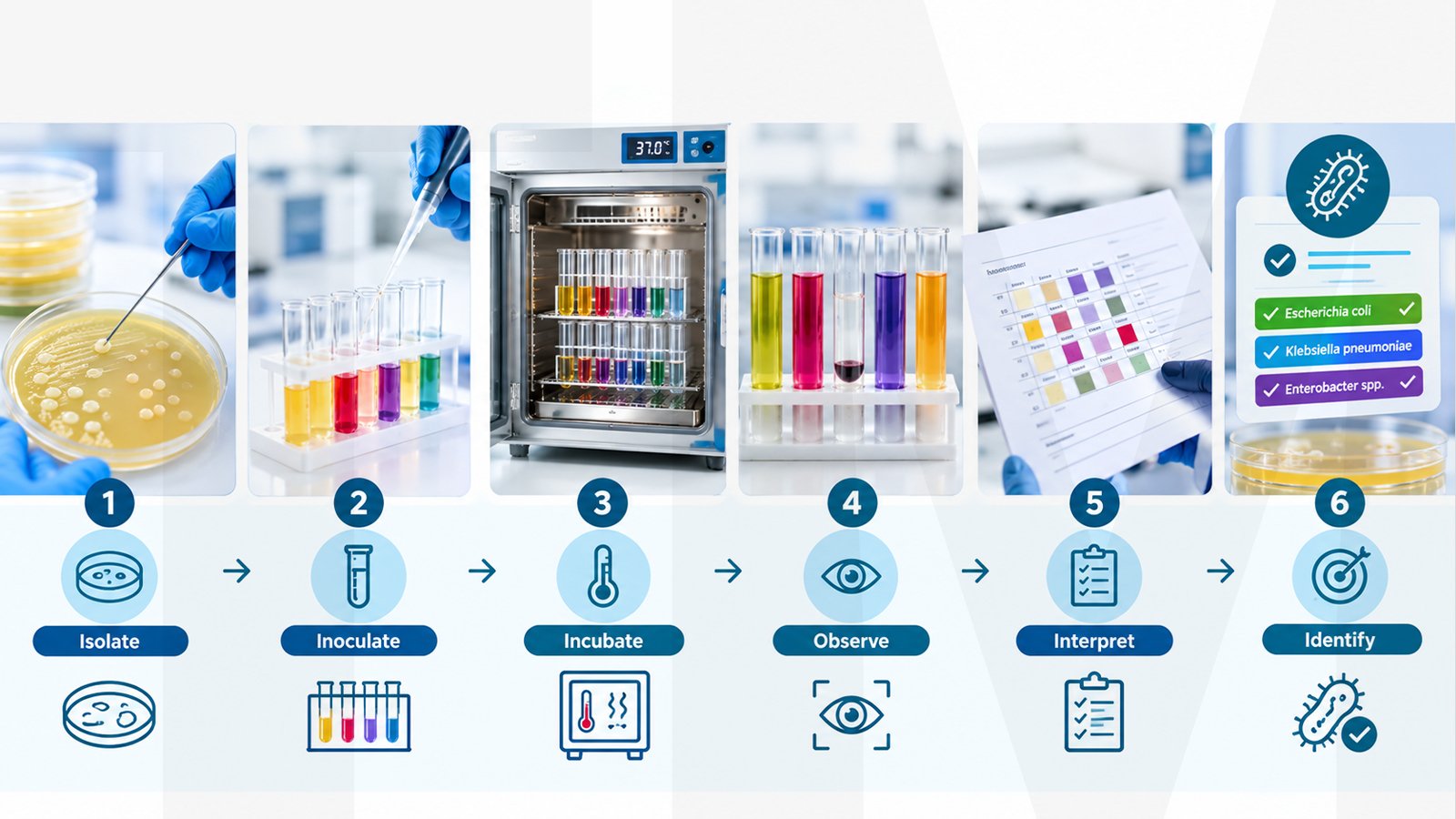
Two bacterial colonies can appear nearly indistinguishable on an agar plate. Yet their metabolic activities can expose significant differences. A...
Read More
A microbiologist studies a bacterial culture that looks no different from many others. Yet, its metabolic capabilities may be an...
Read More
A small tube sits on a microbiologist’s bench, looking almost ordinary. Its orange medium waits for one biological event to...
Read More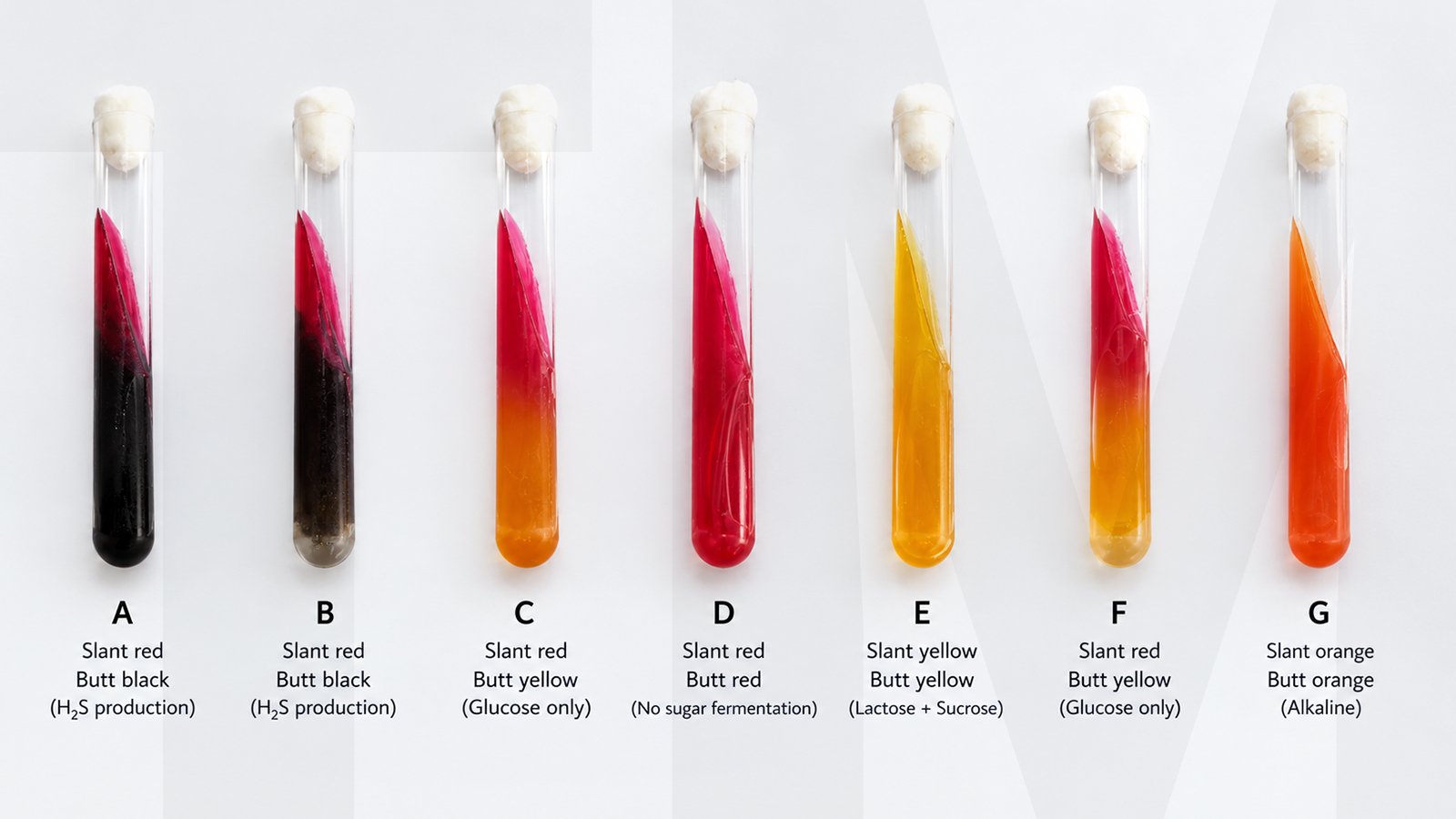
A microbiologist often looks beyond what appears on a culture plate. A tiny change in colour can reveal an important...
Read More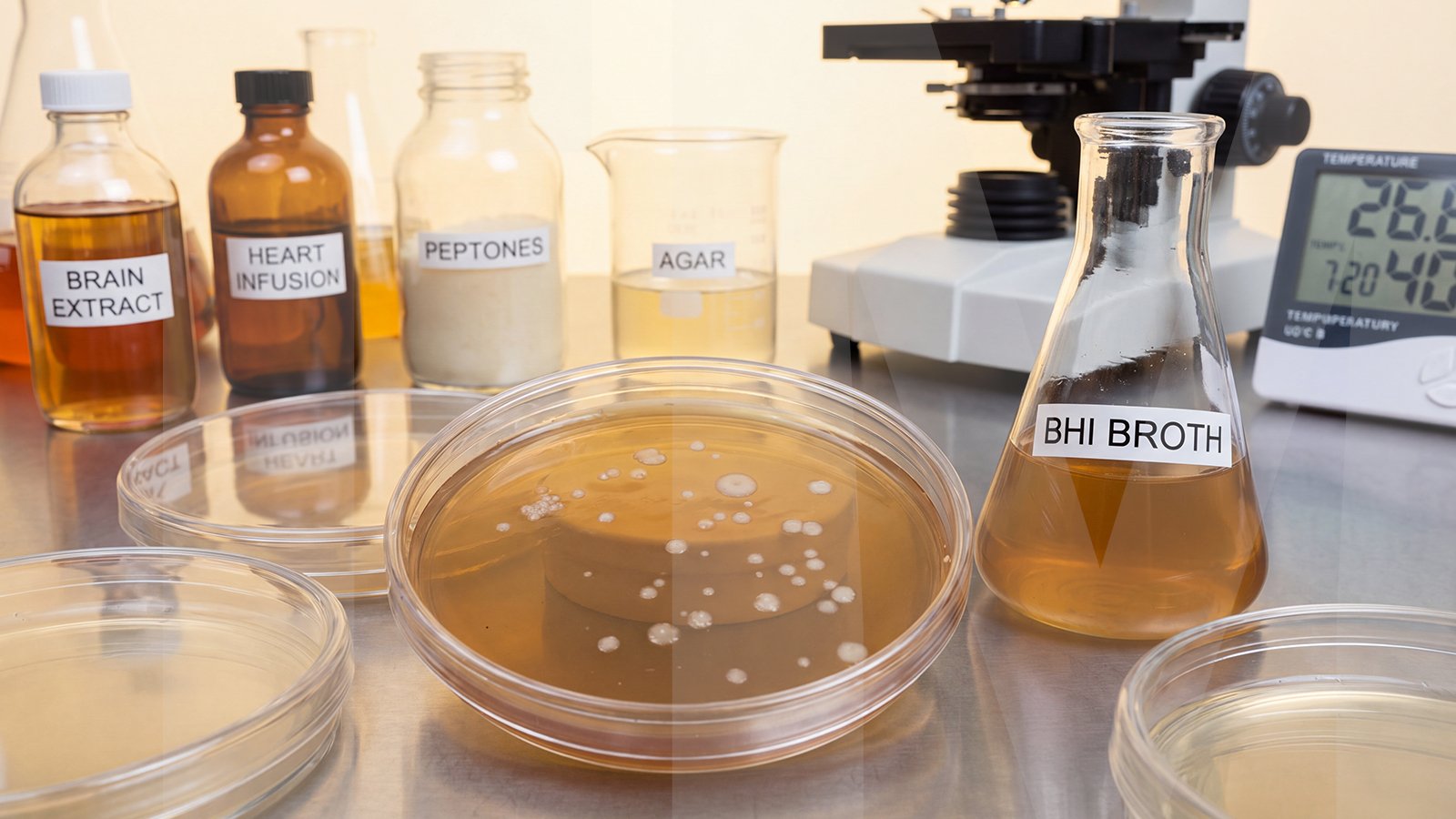
A colony appearing on an agar plate may look like a simple result. Yet, that small colony reflects everything the...
Read More
A microbiologist receives a mixed sample and prepares a fresh culture plate. The next question seems simple: which organism will...
Read More
How can I help you today?
