
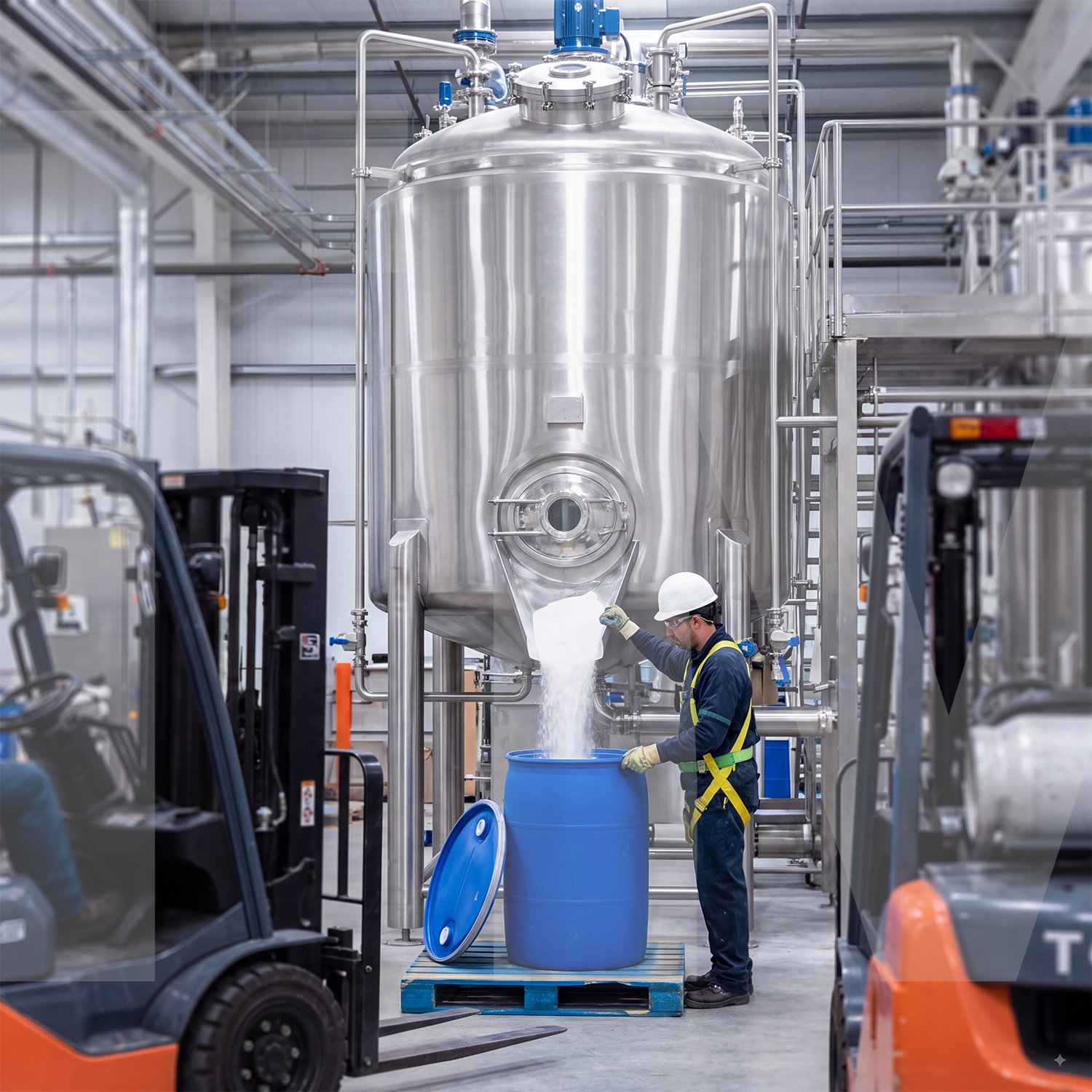
When a microorganism moves from the laboratory to commercial biofertilizer production, one question becomes particularly important: what will you use to grow it at production scale?
There is no single answer.
Some manufacturers prefer a complete culture medium that is already formulated for the cultivation of a particular microorganism. Others prefer to build or optimize their own fermentation medium using individual biological media bases, such as peptones and yeast extracts.
Both approaches can be used for bulk microbial cultivation, fermentation and biofertilizer manufacturing.
The choice comes down to the manufacturer’s process, formulation requirements, level of customization, production strategy, and preference.
TM Media offers both culture media and biological media bases, with options suitable for manufacturers looking for materials for microbial cultivation and bulk production.
In biofertilizer manufacturing, the objective is ultimately the same: to provide the microorganism with a suitable nutritional environment for consistent growth and production.
How a manufacturer achieves this can vary.
Option 1: Complete Culture Media
A complete culture medium contains the required nutritional components in a formulated combination. It can be particularly useful when the manufacturer wants a standardized medium for a specific microorganism or application.
For microbial manufacturers, complete media can be considered not only for laboratory work but also for larger-scale cultivation and production, provided the formulation is suitable for the process and available in the required quantity.
Option 2: Biological Media Bases
Instead of using a complete formulation, manufacturers can choose individual biological media bases and develop a medium around their microorganism and fermentation process.
Peptones, yeast extracts and other media ingredients can be combined according to the nutritional requirements of the strain and the manufacturer’s process.
This approach can provide greater flexibility when manufacturers want to optimize their fermentation medium, modify nutrient levels, or work with an established in-house formulation.
Which Approach Should You Choose?
There is no universal rule.
Complete culture media can be used for bulk production.
Biological media bases can be used for bulk production.
The preferred option is entirely up to the manufacturer.
The decision may depend on the microorganism, existing process, formulation requirements, production economics, degree of customization, equipment, and sourcing strategy.
Biofertilizers can contain different types of beneficial microorganisms, and their nutritional requirements are not necessarily the same.
TM Media offers specialized culture media for several microorganisms relevant to agricultural microbiology and microbial biofertilizer development.
Rhizobium
Featured medium: Rhizobium Medium
Rhizobium is a nitrogen-fixing microorganism associated with leguminous crops. It is widely studied and used in microbial biofertilizer applications.
Rhizobium Medium can support the cultivation of Rhizobium and can be considered as part of microbial production workflows, depending on the manufacturer’s process.
[Explore Rhizobium Medium]
Azotobacter
Featured media: Azotobacter & Ashby’s Media
Azotobacter is a free-living nitrogen-fixing microorganism relevant to agricultural microbial products.
TM Media offers Azotobacter media and Ashby’s media in different formulations. Manufacturers can select an appropriate formulation according to their microorganism and production requirements.
[Explore Azotobacter & Ashby’s Media]
Azospirillum
Featured medium: Azospirillum Medium
Azospirillum is a plant-associated microorganism investigated for a range of agricultural applications.
Azospirillum Medium is designed for the cultivation of Azospirillum and can be used as part of microbial cultivation and production workflows.
[Explore Azospirillum Medium]
Phosphate-Solubilizing Bacteria
Featured media: Pikovskaya’s Media
Phosphate-solubilizing microorganisms are important candidates in microbial agriculture because of their potential role in improving phosphorus availability.
Pikovskaya’s Media can be used for cultivation and screening of phosphate-solubilizing microorganisms and may form part of the production development process for microbial biofertilizers.
[Explore Pikovskaya’s Media]
Potassium-Solubilizing Bacteria
Featured media: Aleksandrow Media
Potassium-solubilizing microorganisms are also studied for agricultural applications.
Aleksandrow Media can support microbial isolation, enrichment, and related cultivation work involving potassium-solubilizing microorganisms.
[Explore Aleksandrow Media]
Biofertilizer Culture Media at a Glance
| Microorganism | Featured Media | Typical Application |
|---|---|---|
| Rhizobium | Rhizobium Medium | Cultivation & microbial production |
| Azotobacter | Azotobacter / Ashby’s Media | Cultivation & production |
| Azospirillum | Azospirillum Medium | Cultivation & production |
| Phosphate-solubilizing bacteria | Pikovskaya’s Media | Cultivation & screening |
| Potassium-solubilizing bacteria | Aleksandrow Media | Cultivation & enrichment |
Complete culture media are not the only option for manufacturers.
Many microbial production facilities develop their own fermentation formulations using individual nutritional ingredients. This is where biological media bases become important.
Peptones
Peptones are nutrient-rich ingredients commonly used in microbiological media and fermentation. They can provide sources of nitrogen, peptides, amino acids, and other nutrients required for microbial growth.
For biofertilizer manufacturers, peptones can be incorporated into fermentation formulations according to the requirements of the selected microorganism.
[Explore Peptones]
Yeast Extracts
Yeast extracts are another widely used biological media base. They can provide a combination of nutrients including nitrogenous compounds, vitamins, minerals, and other growth-supporting components.
Depending on the fermentation process, yeast extracts can be used as part of a customized nutritional formulation for microbial cultivation and biomass production.
[Explore Yeast Extracts]
Depending on the organism and production process, manufacturers may require additional nutritional components to develop their fermentation medium.
The advantage of using individual media bases is that the manufacturer can build the formulation around the microorganism rather than adapting the microorganism to a fixed formulation.
However, this does not mean media bases are inherently better than complete culture media.
It simply provides another production route.
Complete Media or Media Bases? The Choice Is Yours.
For bulk biofertilizer production, manufacturers may choose either approach.
| Complete Culture Media | Biological Media Bases | |
|---|---|---|
| Bulk production | ✓ | ✓ |
| Microbial cultivation | ✓ | ✓ |
| Fermentation | ✓ | ✓ |
| Production-scale use | ✓ | ✓ |
| Ready-formulated nutrition | ✓ | — |
| Formulation customization | Limited | ✓ |
| Existing in-house formulation | — | ✓ |
| Process optimization flexibility | Limited | ✓ |
| Simple procurement | ✓ | Depends on formulation |
| Best choice | Depends on manufacturer | Depends on manufacturer |
The important point is that neither option should be considered exclusively a research product or exclusively a fermentation product.
Both culture media and biological media bases can be used in bulk manufacturing.
The right choice depends on what works best for your process.
Before selecting a bulk culture medium or media base, manufacturers may consider:
1. The microorganism
Different microorganisms have different nutritional requirements.
2. The production process
A manufacturer with an established fermentation formulation may prefer individual media bases, while another may prefer a complete formulated medium.
3. Level of customization
If the formulation needs frequent modification or optimization, individual media bases may provide greater flexibility.
4. Production volume
The selected material should be available in quantities appropriate for the intended production scale.
5. Process consistency
Consistent raw material quality is important when the same formulation is used across multiple production batches.
6. Procurement preference
Some manufacturers prefer sourcing a ready-to-use formulated medium. Others prefer sourcing individual ingredients and preparing the medium in-house.
There is no universally correct approach.
Whether a manufacturer chooses a complete culture medium or individual media bases, the overall production journey remains similar.
Microorganism Selection
↓
Cultivation & Strain Development
↓
Media / Nutrient Selection
↓
Seed Culture
↓
Fermentation
↓
Biomass Production
↓
Formulation
↓
Biofertilizer Manufacturing
The difference is primarily in how the nutritional medium is sourced and prepared.
A complete culture medium provides a ready formulation.
Biological media bases provide the building blocks for developing or reproducing a formulation.
Both can ultimately support the same goal: large-scale microbial production.
For a manufacturer, the requirement changes considerably once microbial production becomes a regular commercial activity.
A small laboratory pack may be sufficient for research. A manufacturing facility may require bulk quantities for repeated fermentation batches.
Reliable bulk availability can help manufacturers plan production and maintain continuity of supply.
This is relevant for companies producing:
Whether the requirement is a complete culture medium or individual media bases, manufacturers need a supply solution that can support their production scale.
TM Media offers solutions across both sides of microbial nutrition:
Culture Media for specific microorganisms and applications.
Biological Media Bases for manufacturers developing or optimizing their own formulations.
This gives manufacturers the freedom to choose the approach that fits their process.
You may require a complete culture medium in bulk.
Or you may already have a fermentation formulation and need bulk peptones, yeast extracts or other media bases.
Or you may be developing a new microbial production process and evaluating both options.
The choice is yours.
TM Media can support these requirements with culture media and biological media bases for microbial and fermentation applications.
Both product categories can be relevant across different stages of production.
Culture Media
Biological Media Bases
The application depends on the manufacturer’s process—not simply on the product category.
Biofertilizer manufacturers do not all follow the same production model.
Some prefer standardized formulations.
Some develop customized fermentation media.
Some use different approaches at different stages of production.
That is why flexibility matters.
With both culture media and biological media bases, TM Media provides manufacturers with the freedom to choose the solution that fits their process, production scale, and sourcing preference.
Whether you want to purchase a complete culture medium in bulk or source individual media bases for your fermentation process, you can choose the approach that works for you.
Looking for Bulk Culture Media or Biological Media Bases?
Developing or manufacturing microbial biofertilizers?
Whether you need complete culture media for bulk microbial cultivation or biological media bases for your own fermentation formulation, TM Media can help you explore suitable options.
Your microorganism. Your process. Your choice.
Explore TM Media Solutions
Culture Media | Biological Media Bases | Bulk Supply | Fermentation Applications
[View Culture Media] | [Explore Biological Media Bases] | [Request a Quote]
A. Yes. Culture media are not limited to laboratory research. Depending on the formulation, microorganism, process requirements, and scale, complete culture media can also be used for bulk microbial cultivation and biofertilizer production.
Can biological media bases be used for fermentation?
A. Yes. Biological media bases such as peptones and yeast extracts can be used to prepare or optimize fermentation media for microbial cultivation and biomass production.
Which is better for bulk production: culture media or media bases?
A. There is no single answer. Both can be used for bulk production. Complete culture media may be preferred when a manufacturer wants a standardized formulated medium, while biological media bases may be preferred when the manufacturer wants to prepare or customize its own fermentation formulation.
The decision is entirely based on the manufacturer’s process and preference.
Can TM Media supply culture media and media bases in bulk?
A. TM Media offers culture media and biological media bases for microbiological and fermentation applications, with bulk requirements suitable for manufacturers to be discussed according to the specific product, application, and production requirement.
The Choice Is Yours
Complete culture media or individual media bases.
Standardized formulation or customized fermentation medium.
Laboratory development or commercial-scale production.
There is no one-size-fits-all approach to microbial manufacturing.
Choose what works best for your microorganism, your fermentation process, and your production requirements.
TM Media — Culture Media & Biological Media Bases for Microbial Production.
Every morning the microbiology lab receives fresh agar plates from the incubator. Each plate carries dozens of tiny bacterial colonies....
Read More
A water quality laboratory receives samples taken from different points of a distribution network. The testing team shall determine whether...
Read More
A laboratory receives an urgent request after a routine water quality inspection. Drinking water samples come into a municipal water...
Read More
A food manufacturer sends two batches of packaged juice to the laboratory. Both batches look the same. They have the...
Read More
A microbiologist finishes inoculating a culture plate and places it inside the incubator. The next day, the plate is covered...
Read More
How can I help you today?
