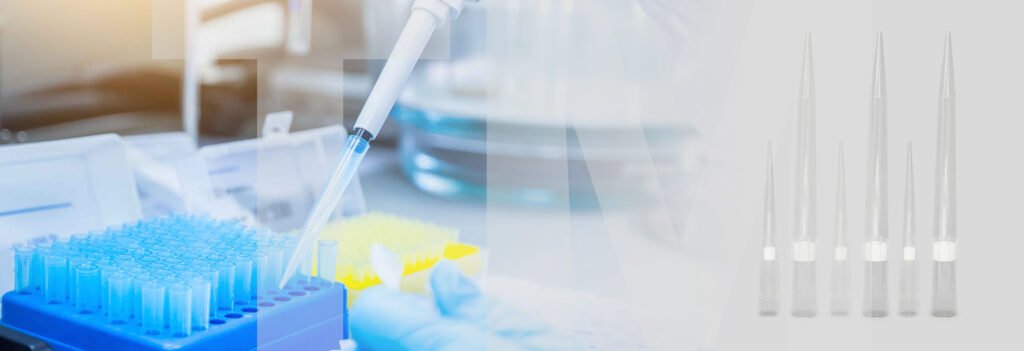
In laboratory work, a minor error in handling liquids can compromise the accuracy of a whole experiment. Whether it is preparing a reagent, transferring a culture sample, or setting up a PCR reaction, every step requires precision. This is why micropipette tips are commonly used items in laboratories. Micropipette Tips can measure very small volumes of liquids accurately so they are applied to both routine tests as well as advanced research. From microbiology and molecular biology to pharmaceutical and clinical laboratories, micropipettes are used almost every day.
Micropipette Tips are laboratory tools which enable accurate measuring and dispensing of small quantities of liquid. These quantities are often measured in microliters. Micropipettes have better precision than glass pipettes and are more convenient for repeating the same procedure several times. Different micropipette tips are designed for different volume ranges. Some handle very small amounts while others are designed for much larger sample volumes. The instrument usually works with disposable tips, which minimize cross-contamination between samples. One of the prominent factors contributing to increasing applications of micropipettes in laboratories is requirement of accuracy while preparing the samples and in analytical testing.
Micropipette Tips are essential to maintain accuracy and clean sample handling. The tips are designed to securely attach on the micropipette allowing a smooth flow of liquid without any loss of accuracy. Made from virgin polypropylene, high quality tips provide superior clarity allowing users to observe the handling of liquids more comfortably. Their design also allows for an optimal sealing on most micropipettes, allowing uninterrupted pipetting during routine work.
Low retention and filtered tips are now widely applied by many laboratories as they help reduce aerosol contamination and sample loss. In sensitive applications, these factors become extremely important. Reliable pipette tips improve daily micropipette uses by helping maintain consistency during repetitive liquid handling procedures.
Although micropipette tips are designed with high precision, their accuracy and performance may be affected by several factors during use:
The control and understanding of these parameters leads to minimal errors and improves stability to the experiment.
The precision of pipetting depends not only on the pipette itself. The quality of the tip is also important. Proper sealing and smooth dispensing can be achieved with well designed tips. DNase, RNase and pyrogens free tips are generally recommended for sensitive molecular applications to protect the integrity of the sample.
Autoclavable tips effectively support the sterile laboratory working conditions and promote reuse in certain workflows after sterilization. Universal compatibility with most micropipettes allows the lab to retain flexibility without switching equipment too often. Proper tip selection improves the overall use of micropipette systems in daily laboratory operations.
Modern laboratories focus heavily on contamination control and consistency of workflow. This is where quality micropipette tips become valuable. Low retention designs minimize wastage of sample, in particular with protein, enzyme or viscous solutions. Filtered tips are employed to keep samples and pipettes free of aerosol contamination. These design enhancements enable the laboratory to run smoothly and improve routine micropipette uses in high throughput testing environments.
Precision of pipetting relies on the micropipette and the tip being used with it. To ensure accuracy in liquid handling, decrease risk of contamination and maintain efficiencies in daily testing, micropipette tips from TM Media are manufactured under high quality standards.
These features ensure that laboratories can rely on the performance of the micropipette for different applications.
Accurate liquid handling is necessary in lab work and micropipette tips still have a major influence in maintaining that accuracy. The range of micropipette uses is growing with the increasing demands of laboratories, from microbiology and molecular biology to diagnostics and pharmaceutical testing.
The quality of a micropipette tips has a direct impact on its performance, uniformity and contamination protection. Well formulated tips allow for smooth workflows and help to obtain reliable results in routine work. With careful handling of the micropipettes, selection of the appropriate tip and regular use, labs can improve the ability to increase the productivity and reliability of their routine pipetting work without unnecessary complications.
A. Calibration periods differ with use in the lab, however consistent calibration will maintain accuracy and uniform handling of the liquid.
A. Yes, as they help to enhance recovery of challenging liquids and reduce sample loss.
A. The use of the wrong tip size can have an impact on sealing, liquid transfer accuracy and consistency of sample.
A. Yes
A. Air leakage may occur if a tip is not fitted properly, and this will lead to inconsistent aspiration and dispensing of liquid.
A colony appearing on an agar plate may look like a simple result. Yet, that small colony reflects everything the...
Read More
A microbiologist receives a mixed sample and prepares a fresh culture plate. The next question seems simple: which organism will...
Read More
A microbiologist opens two Petri plates after incubation. Both plates contain the same sample. One plate shows clear, well-separated colonies....
Read More
When a microorganism moves from the laboratory to commercial biofertilizer production, one question becomes particularly important: what will you use...
Read More
Every morning the microbiology lab receives fresh agar plates from the incubator. Each plate carries dozens of tiny bacterial colonies....
Read More
A water quality laboratory receives samples taken from different points of a distribution network. The testing team shall determine whether...
Read More
How can I help you today?
