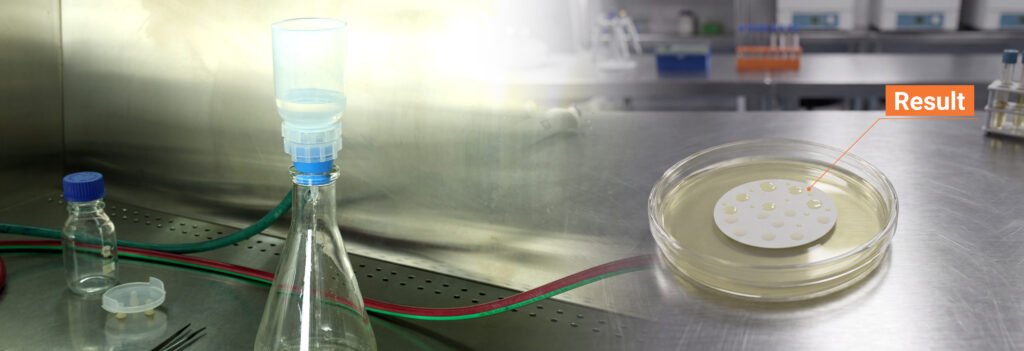
A laboratory receives an urgent request after a routine water quality inspection.
Drinking water samples come into a municipal water testing lab after routine distribution monitoring. Every sample looks crystal clear. There are no visible particles or discolouration. The laboratory knows that clear water does not always mean microbiologically safe water.
A microbiologist filters a measured volume of each sample through a sterile membrane and places the filter on a culture medium. After incubation, a few colonies appear on one membrane while the remaining samples show no growth. Those little colonies help the lab detect contamination before the water reaches consumers.
This simple step facilitates routine microbiological testing and protects the public health. That is why membrane filtration remains an important method for examining liquid samples in many laboratories.
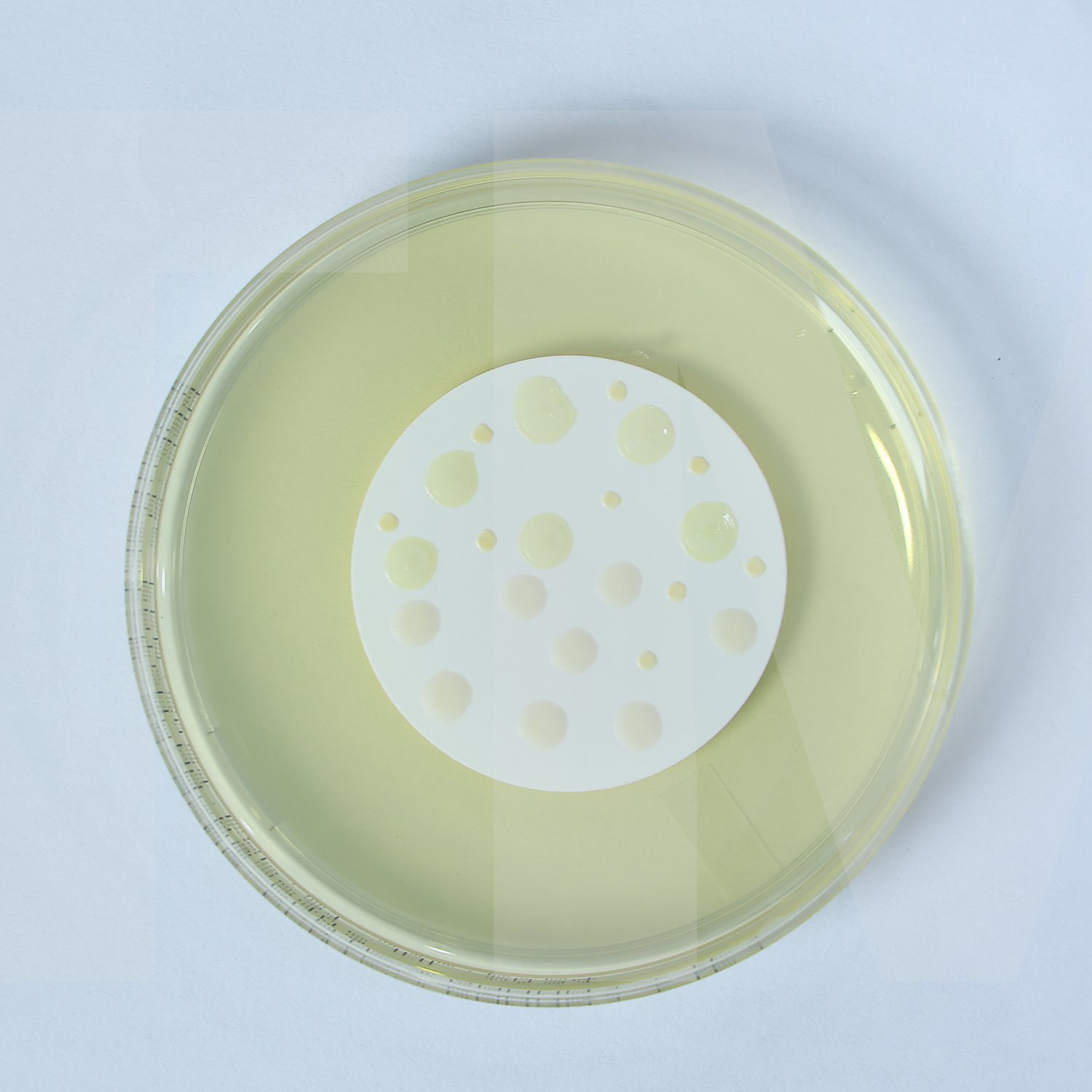
Membrane filtration is a microbiological technique to separate microorganisms from liquid samples by passing the sample through a sterile membrane filter of defined pore size. As the liquid passes through, the membrane retains the microorganisms on its surface. The microbiologist then places the membrane on the proper culture media to incubate. Any viable microorganisms will form visible colonies which can be counted or identified.
With this technique, even low levels of microorganisms in samples that might look clean can be identified in the laboratory.
The success of membrane filtration for the examination of microorganisms depends upon the ability to concentrate them onto a small area of surface. This enables microbiologists to look at organisms that might be undetected in larger sample volumes.
Once microorganisms get concentrated on the membrane, every viable cell forms a separate colony under appropriate growth conditions. Well-separated colonies allow microbiologists to examine colony morphology and recover isolates for further identification when required.
The method is especially suitable for samples, in which microorganisms are expected to be present in very small amounts. The pre-enrichment of microorganisms prior to incubation increases the chance of detection of contamination in the routine analysis of microbiological products.
Many microbiology laboratories use membrane filtration because it works well with liquid samples that require high sensitivity.
Water testing laboratories examine drinking water, purified water, wastewater, and environmental samples. Routine testing supports public health monitoring and quality assessment.
The food and beverage laboratories analyse bottled water, beverages, liquid ingredients and process water employed during production. These tests are a means to check sanitation practices and the quality of the product.
In pharmaceutical laboratories, microbial examination is performed on purified water, water for injection, raw materials and other liquid products. These tests provide quality assurance and regulatory compliance.
The method is also used in research and teaching laboratories for microbial studies, method validation and practical training in microbiology.
Microbial contamination is frequently found in water samples at low levels. Direct plating of the organism may not produce a sufficient number of organisms for a dependable examination.
Thus, some laboratories prefer to use membrane filtration water treatment testing methods for monitoring microbiological quality. This technique allows recovery of microorganisms from larger sample volumes onto a single membrane surface.
This concentration step increases the recovery of the microorganism and enables a precise detection in the routine laboratory analysis.
Moreover, this procedure allows microbiologists to recover isolated colonies for additional confirmation, if needed.
Successful microbial analysis depends on more than the membrane and the culture medium. The filtration assembly is also important for sample handling and consistency of testing.
The Membrane Filtration Funnel from TM Media is ideal for the microbiological analysis of liquid samples. It is supplied pre-sterilized and individually packed, helping laboratories perform routine filtration with convenient and hygienic handling.
The funnel is suitable for water testing, food and beverage quality control, pharmaceutical microbiology and research laboratories. With compatible membrane filters and appropriate culture media, it allows processing of samples in a convenient way without compromising the microbial recovery.
Routine membrane filtration in laboratories is made easier and more consistent with reliable filtration equipment.
Advances in laboratory automation have introduced many rapid microbiological methods. However, many laboratories still use membrane filtration for routine microbial examination.
The method combines concentration, recovery and colony isolation in a single workflow. It also allows further identification because microorganisms are available after incubation.
Many laboratories still use membrane filtration technology because it gives good results for many different types of samples and can be easily added to the laboratory’s current procedures.
Its versatility makes it suitable for routine quality control as well as for specialised microbiological investigations.
Microbiological testing depends on methods that produce dependable and reproducible results. Laboratories must detect contamination before it affects product quality, regulatory compliance or public health.
Membrane filtration remains a useful technique for the analysis of liquid samples containing low numbers of microorganisms. It helps microbiologists isolate viable microorganisms, examine colony morphology, and perform accurate microbial analysis.
The combination of good technique, appropriate culture media, and validated procedures allows laboratories to generate repeatable data for routine microbiological testing. Despite the development of newer analytical methods, it is still a valuable technique in modern microbiology laboratories.
Membrane filtration concentrates microorganisms from a liquid sample before cultivation. Direct plating places a measured sample volume directly onto or into a culture medium without this concentration step.
The sample volume is determined by the type, microbial load and testing requirement. Laboratories choose an appropriate volume to ensure effective filtration without clogging of the membrane.
Laboratories often use membrane filters made of cellulose nitrate, cellulose acetate or polyethersulfone. The selection is based on the sample and testing approach.
Yes.
Filtration may be impaired by high levels of suspended particles or other solids.

We cordially invite you to MP TRAPACON 2026, a premier conference bringing together microbiologists, researchers, clinicians, and laboratory professionals.Join us...
Read More
A food manufacturer sends two batches of packaged juice to the laboratory. Both batches look the same. They have the...
Read More
A microbiologist finishes inoculating a culture plate and places it inside the incubator. The next day, the plate is covered...
Read More
Every microbiologist has seen this happen. A clinical specimen from a patient with suspected bacterial meningitis is received. The sample...
Read More
At some point all microbiologists have experienced this situation at least once. A clinical specimen arrives at the laboratory. It...
Read More
How can I help you today?
