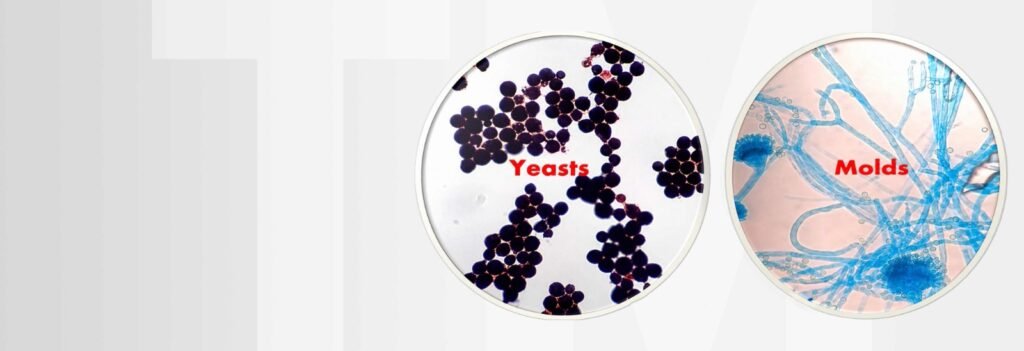
When working in a microbiology lab, not all microorganisms behave the same way. Some grow fast, some grow slowly, and some require very specialized conditions to grow. This is even more apparent in fungi. To grow properly, fungi require a different environment than many bacteria. This is where sabouraud dextrose agar becomes useful.
Rather than relying on complex setups, this medium allows for the growth and investigation of fungi under the laboratory conditions. This medium has been used for years as a general use media for fungal research particularly for clinical and laboratory studies.
Sabouraud Dextrose Agar is a selective culture medium most commonly used for isolation and growth of fungi including yeasts and molds. It is not an extremely complex formulation but works well as a result of carefully balanced constituent ingredients.
The medium mainly contains peptone, dextrose, and agar. Dextrose serves as a source of energy and the peptone supplies the nutrients for growth. To solidify the medium, agar is added so that colonies can grow on the surface. One notable feature of sabouraud dextrose agar is its mildly acidic pH. pH reduction contributes to suppress the growth of many bacteria and helps fungal growth without competition.
Fungi grow better under slightly acidic conditions which is provided by sabouraud dextrose agar. It permits the growth of fungi and suppresses bacterial interference.
Sabouraud Dextrose Agar is used in many areas of microbiology. In the clinical laboratory, it is commonly used to detect fungal diseases in skin scrapings, nails, or respiratory samples.
In addition, it is used in the food and beverage industry to detect the presence of fungal contamination which can eventually affect the quality of products. SDA Agar is used for testing microbial contamination in cosmetics and pharmaceutical testing.
Environmental testing is another area where this medium plays a role. It can be used for analysis of fungi present in air, soil, or water samples.
There are certain drawbacks of sabouraud dextrose agar as a common medium for fungal growth, which could be taken into account while performing the tests.
Preparation of sabouraud dextrose agar is not difficult but needs attention. The ingredients are dissolved in water, heated properly, and sterilized using an autoclave. The medium is then dispensed into sterile petri dishes and allowed to solidify. The plates should be stored properly after preparation to prevent contamination. Standard sterile techniques should be followed during use. A single small mistake in any step of the process may change the growth pattern and produce false observations.
Sabouraud Dextrose Agar is still the most commonly used media, even though advanced methods of diagnosis are available. It is simple, cost-effective, and when processed correctly, provides dependable results.
It continues to be a handy option for numerous laboratories, particularly those performing routine fungal cultures. It does not replace sophisticated identification methods, but it is a very important initial step in the isolation and detection of fungi.
Sabouraud Dextrose Agar is probably a simple culture medium, but its role in microbiology is quite important. It gives a suitable condition for the growth of Fungi with a minimum interference of Bacteria. Its use ranges from clinical diagnosis to industrial testing. Although it has its limitations, its simplicity and effectiveness ensure that it can be relied upon in the day to day lab work. Sabouraud Dextrose Agar is not just a food for fungi, but it is about seeding the right conditions to study and understand them better.
A. No, it is used for general growth and isolation. Organisms are subjected to special preservation methods such as refrigeration, cryopreservation for long term storage.
A. Dextrose is an excellent source of energy for fungal growth, even for the fastidious fungi.
A. These colour changes may be a reflection of their metabolic activity, or spore formation, or age of the colony.
A. Store in a cool dry place in sealed conditions.
A. Yes, if not stored properly.
Two bacterial colonies can appear nearly indistinguishable on an agar plate. Yet their metabolic activities can expose significant differences. A...
Read More
A microbiologist studies a bacterial culture that looks no different from many others. Yet, its metabolic capabilities may be an...
Read More
A small tube sits on a microbiologist’s bench, looking almost ordinary. Its orange medium waits for one biological event to...
Read More
A microbiologist often looks beyond what appears on a culture plate. A tiny change in colour can reveal an important...
Read More
A colony appearing on an agar plate may look like a simple result. Yet, that small colony reflects everything the...
Read More
A microbiologist receives a mixed sample and prepares a fresh culture plate. The next question seems simple: which organism will...
Read More
How can I help you today?
