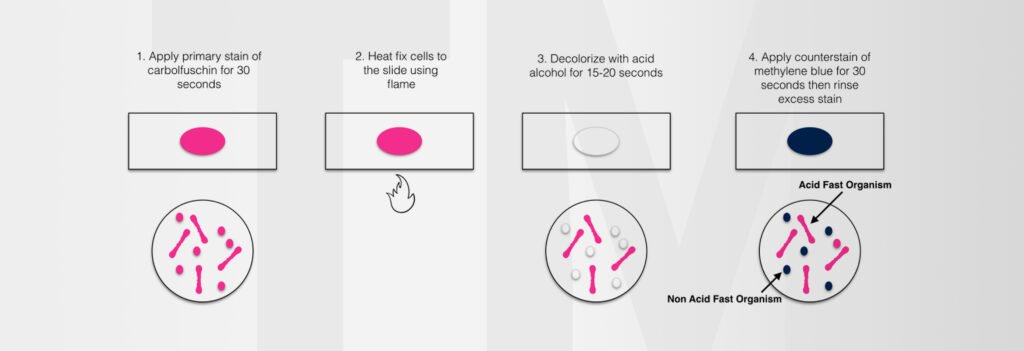
In the microbiology laboratory, not all bacteria are the same. Some can be stained and seen easily while others are resistant to most staining techniques. This difference can make identification a little more difficult, especially when two strong-walled organisms are involved. This is where zn staining comes in.
This method has been used for many years, particularally in clinical laboratories to identify selective kinds of bacteria that are resistant to techniques like Gram staining. Since these types of bacteria are difficult to identify with conventional methods, a more precise technique is needed. This is the reason zn staining is still used today, as it helps in accurate identification when the current method fails to achieve the desired results.
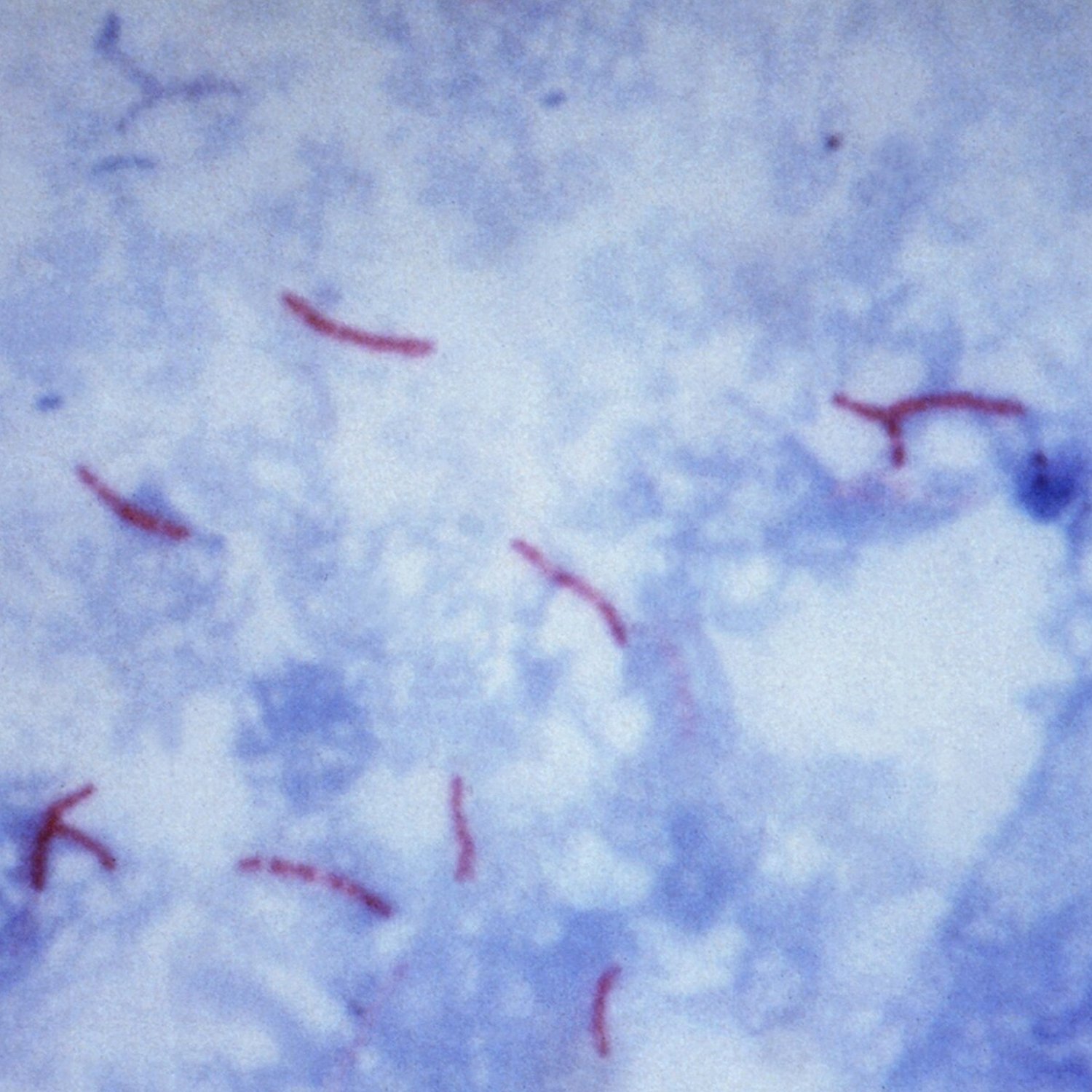
ZN Staining, also known as Ziehl Neelsen staining. It is a special staining procedure used in microbiology to identify the acid-fast bacteria. It uses the strong primary stain and heat to penetrate into those cells that normally resist routine staining. Thus, organisms that are otherwise difficult to visualize can be readily detected under the microscope.
Unlike regular staining methods, zn staining uses heat and strong dyes to push the stain into the bacterial cell. Once the stain enters, even with acid-alcohol treatment, it is difficult to take it out.
This property is what makes the method useful. Bacteria that hold the stain are termed acid-fast, and those that do not are non-acid-fast. This simple distinction helps microbiologists narrow down their identification process.
In order to know how it works, it is important to look at the principle of zn staining. The method relies on the capacity of certain bacteria to hold on to a primary stain when subjected to a strong decolorizing agent.
In simple terms, the cell wall becomes permeable by heat when the stain is applied. After that, an acid wash is used. Most cells release the stain, but acid fast bacteria retain it. This forms the basis of differentiation. The ZN Stain principle is not very complicated, but it is sufficient to distinguish acid-fast organisms from others in a sample.
The whole staining procedure of Ziehl Neelsen Stain is a balance act, and all steps are crucial for acid fast bacteria to be properly stained. All steps are very important for obtaining clear and accurate results.
This whole process is sometimes called the ZN Stain procedure and while it looks simple, each step must be done accurately to avoid errors.
ZN Staining is widely applied in clinical microbiology in the practical field. It is crucial for diagnosis of diseases such as tuberculosis where acid-fast bacteria is important. It is also employed in research laboratories and sometimes, in environmental work for identification of acid-fast organisms. Despite newer molecular methods, zn staining continues to be used because it is simple and cost-effective.
Although zn staining is a standard procedure, it has some limitations that should be considered while interpreting results. Understanding them will help prevent errors and increase accuracy in diagnosis.
ZN Staining is still of great importance even with modern technologies. It remains a staple in many labs for initial presumptive identification of acid-fast organisms. It requires no expensive equipment and can be performed in basic lab conditions. This is why it is so useful in resource limited settings. In addition, it provides quick results, which may be relevant in clinical situations where early detection is significant.
ZN Staining might seem like an ordinary lab technique, but its impact in the field of microbiology is quite significant. It allows the identification of organisms that are very difficult to visualize by routine staining techniques.
By understanding the principle of zn staining and following the ZN Stain procedure carefully, reliable results can be obtained. Even though it has some drawbacks, it is still an effective and useful instrument in clinical and research laboratories. However, zn staining is more than just staining cells. It is about making invisible organisms visible in a way that enables understanding and diagnosing diseases more effectively.
A. It should be thin enough to allow proper staining and clear observation.
A. It is used as a decolorizer which removes the primary stain from the non-acid-fast cells, while acid-fast bacteria retain the color.
A. Yes, the result might be affected by the procedure of staining.
A. It is employed as it is able to penetrate the hard, waxy walls of acid-fast organisms.
A. The counterstain makes non-acid-fast cells visible. This also contributes in distinguishing them from acid-fast bacteria.
Two bacterial colonies can appear nearly indistinguishable on an agar plate. Yet their metabolic activities can expose significant differences. A...
Read More
A microbiologist studies a bacterial culture that looks no different from many others. Yet, its metabolic capabilities may be an...
Read More
A small tube sits on a microbiologist’s bench, looking almost ordinary. Its orange medium waits for one biological event to...
Read More
A microbiologist often looks beyond what appears on a culture plate. A tiny change in colour can reveal an important...
Read More
A colony appearing on an agar plate may look like a simple result. Yet, that small colony reflects everything the...
Read More
A microbiologist receives a mixed sample and prepares a fresh culture plate. The next question seems simple: which organism will...
Read More
How can I help you today?
