
During routine microbiology work, particularly while processing stool or food specimens, a common problem is the presence of mixed bacterial populations. Many of these organisms are cultured together, and separating normal flora from pathogens is difficult without the appropriate medium. This is where a good selective medium really helps. DCA Agar is a selective medium that simplifies this process by permitting growth of desired bacteria and suppressing growth of unwanted bacteria.
Unlike the general purpose media which allow growth of almost all the microbes, dca agar is both selective and differential. It is intended for the selective isolation of intestinal pathogens, mainly Salmonella and Shigella, but also inhibits growth of other bacteria. It provides dependable, consistent pathogen recovery for handling stool, food, or clinical diagnostics. From diagnostic labs to food microbiology units, this agar is a useful tool when working with enteric pathogens.
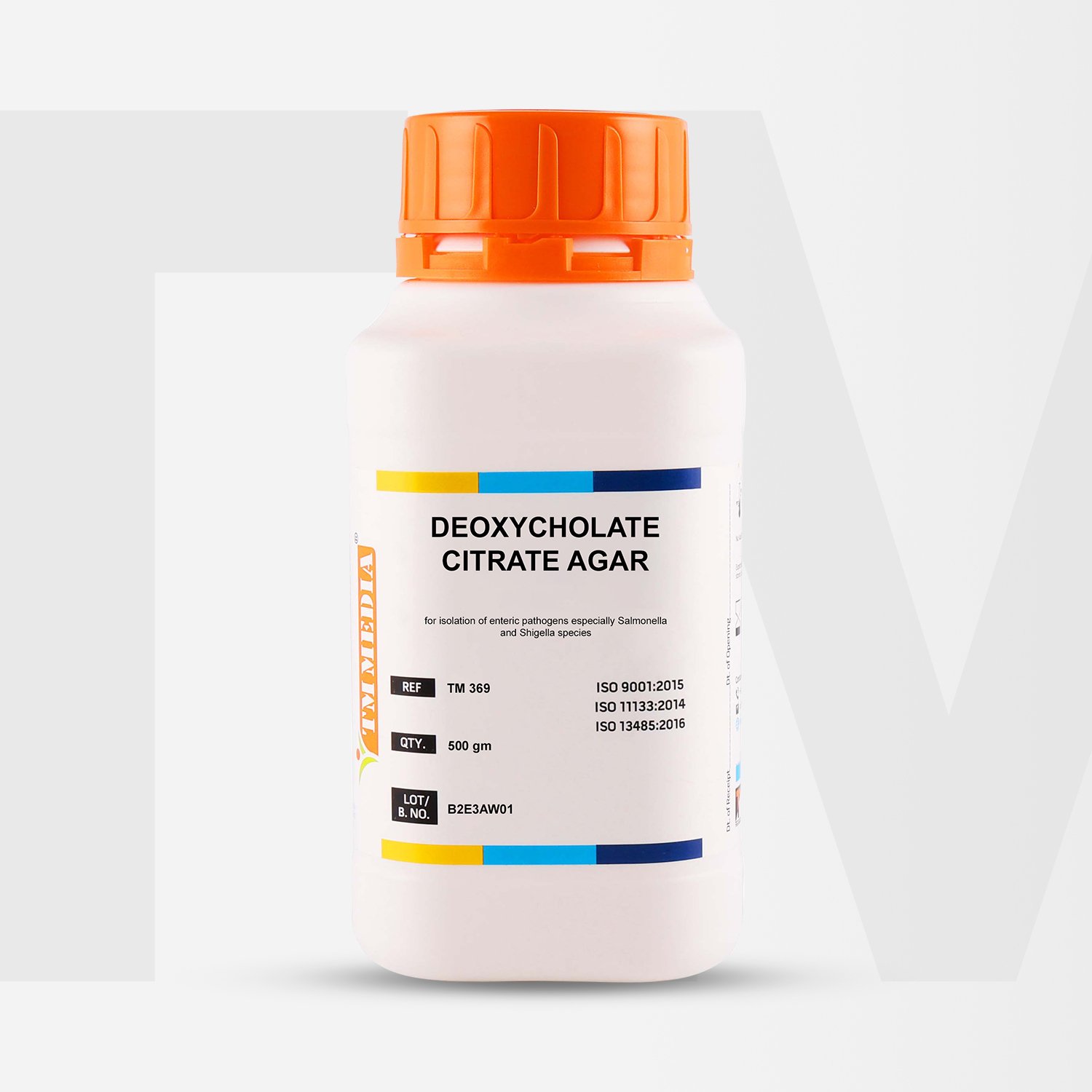
DCA Agar full form is Deoxycholate Citrate Agar. This medium is specially prepared for the isolation of enteric pathogens, mainly Salmonella and Shigella species. The composition has been made according to a modified procedure, which increases the selectivity by adding higher concentrations of the inhibitory components.
The medium works by suppressing the growth of gram-positive bacteria and many normal intestinal organisms, and thus enables growth of pathogenic bacteria more clearly. Due to its selective properties this agar can be used for detection of relatively heavy inocula without overgrowth of unwanted organisms. It is often used for routine examination of clinical samples. In microbiology workflows, DCA Medium is commonly included when enteric pathogen detection is required.
The effectiveness of dca agar depends on its balanced combin.ation of nutrients and inhibitory substances.
| Ingredients | Gms / Ltr |
| Heart Infusion solids | 10.000 |
| Proteose peptone | 10.000 |
| Lactose | 10.000 |
| Sodium deoxycholate | 5.000 |
| Neutral red | 0.020 |
| Sodium citrate | 20.000 |
| Ferric ammonium citrate | 2.000 |
| Agar | 13.500 |
Each of these components supports either growth, inhibition or differentiation, making DCA Media suitable for selective isolation.
The working of dca agar is based on both selective inhibition and visual differentiation.
Heart infusion solids and proteose peptone supply the necessary nutrients such as carbon, nitrogen, vitamins and minerals. Sodium deoxycholate and sodium citrate provide inhibitory agents that reduce gram positive bacteria and a large number of coliform organisms. This produces a better environment for enteric pathogens.
Lactose is a fermentable carbohydrate. The acidification of the medium by the lactose fermenting bacteria alters the colour of the pH indicator neutral red, leading to pink colonies. Non lactose fermenters remain colourless allowing for easier differentiation.
Ferric ammonium citrate plays a role in detecting hydrogen sulfide production. When organisms produce hydrogen sulfide, it reacts to form black centered colonies. This feature helps in identifying Salmonella species more clearly. Because of these combined actions, this agar is both selective and differential media.
For proper preparation of the medium, standard laboratory practices should be followed.
Correct preparation ensures that this agar performs as expected during microbial isolation.
After incubation, the medium allows easy observation of colony characteristics.
| Microorganism | ATCC | Inoculum(CFU/ml) | Growth | Recovery | Colour ofcolony | H2S | IncubationTemperature | IncubationPeriod |
|---|---|---|---|---|---|---|---|---|
| Enterococcusfaecalis | 29212 | >=103 | Inhibited | 0% | – | – | 35-37°C | 18-24Hours |
| Escherichia coli | 25922 | 50-100 | Poor | 20-30% | Pink withbileprecipitate | Negativereaction | 35-37°C | 18-24Hours |
| SalmonellaEnteritidis | 13076 | 50-100 | Good-luxuriant | >=50% | – | Positivereaction,blackcenteredcolonies | 35-37°C | 18-24Hours |
| SalmonellaTyphimurium | 14028 | 50-100 | Good-luxuriant | >=50% | Colourless | Positivereaction,blackcenteredcolonies | 35-37°C | 18-24Hours |
| Shigella flexneri | 12022 | 50-100 | Good | 40-50% | Colourless | – | 35-37°C | 18-24Hours |
| Escherichia coli | 8739 | 50-100 | Poor | 20-30% | Pink withbileprecipitate | Negativereaction | 35-37°C | 18-24Hours |
| Staphylococcusaureus subsp.aureus | 25923 | >=104 | Inhibited | 0% | – | – | 35-37°C | 18-24Hours |
Such distinct patterns make this agar suitable for identifying enteric pathogens in mixed samples.
The use of dca agar is mainly focused on isolating intestinal pathogens.
It is widely used in food microbiology for the detection of contamination with Salmonella and Shigella. In clinical laboratories, it is used for the examination of stool specimens. It may be applied for environmental sampling where the detection of enteric bacteria is required.
The selectivity of this agar suppresses the growth of non-target organisms and allows the identification of pathogens at the first screening.
The consistency of Culture Media is necessary for routine laboratory work. DCA Agar from TM Media is prepared in accordance with standard microbiology and formulation requirements.
For laboratories that test for enteric pathogens, this medium is a reliable solution.
In microbiology, for isolation of enteric pathogens, selectivity and clarity are necessary. DCA Agar provides that distinction by inhibiting non-target bacteria while promoting the growth of target organisms with distinguishable features.
The nutrient support, inhibitory effect and differential natures of the medium make it suitable for routine laboratory use. When correctly prepared and used, this agar will allow reliable identification of pathogens and help in maintaining uniformity in microbiological results. For laboratories working with stool samples, food testing or environmental analysis, this agar remains a practical and consistent choice.
A. Autoclaving reduces the potency of the selective ingredients and the selectivity of the medium.
A. No, dispose of the plates after proper sterilization.
A. Yes, but it is mostly used in stool and food samples where the enteric organisms are anticipated.
A. It does differentiate, but additional tests can be required for confirmation.
A. Because many organisms are suppressed but few non-target organisms also grow in small numbers.
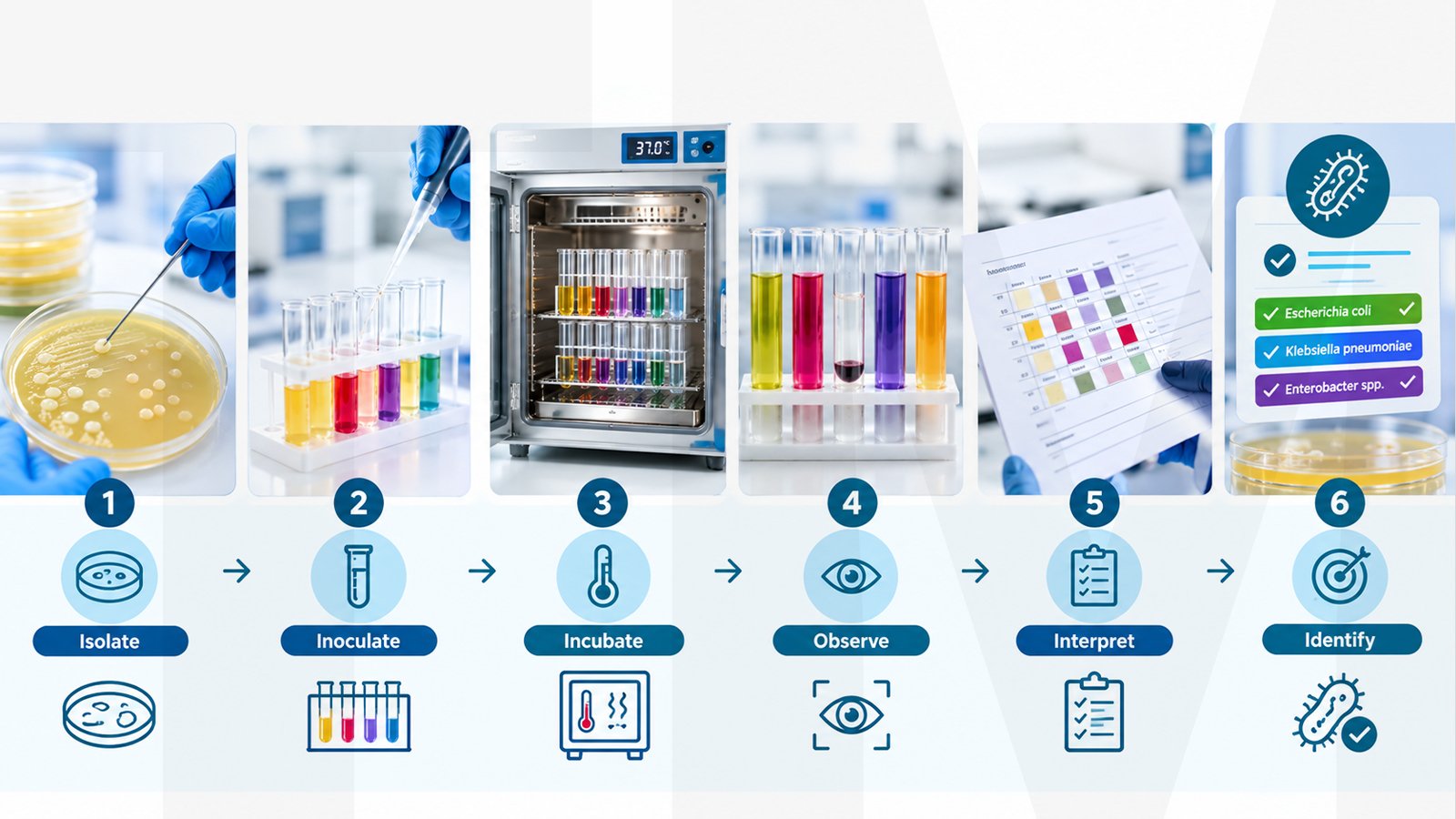
Two bacterial colonies can appear nearly indistinguishable on an agar plate. Yet their metabolic activities can expose significant differences. A...
Read More
A microbiologist studies a bacterial culture that looks no different from many others. Yet, its metabolic capabilities may be an...
Read More
A small tube sits on a microbiologist’s bench, looking almost ordinary. Its orange medium waits for one biological event to...
Read More
A microbiologist often looks beyond what appears on a culture plate. A tiny change in colour can reveal an important...
Read More
A colony appearing on an agar plate may look like a simple result. Yet, that small colony reflects everything the...
Read More
A microbiologist receives a mixed sample and prepares a fresh culture plate. The next question seems simple: which organism will...
Read More
How can I help you today?
