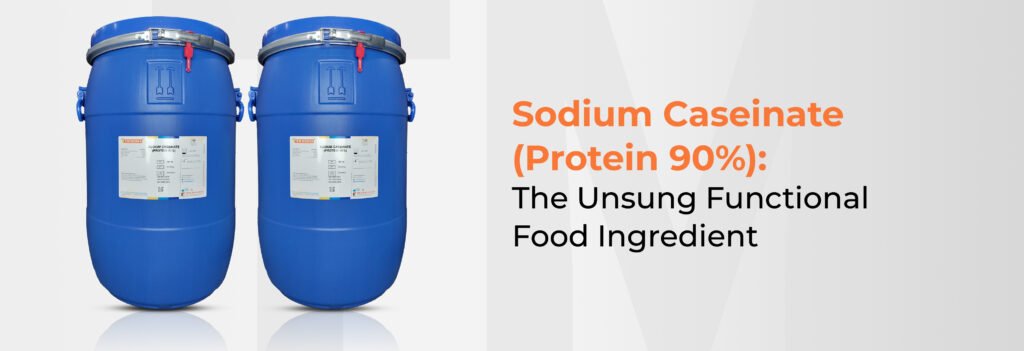
Ever flipped a nutrition label and set foot in a food lab, you have probably come across a name that looks more like chemistry class than breakfast: sodium caseinate. At first, it sounds like something only scientists in crisp lab fleeces should worry about. But actually, it is far less intimidating than it looks. In fact, it is a humble little protein that comes from milk. And it has been quietly holding things together in your favourite foods for years now.
Picture it as the backstage crew of a theatre production. You don’t notice them, but without their work, the performance would collapse. That foamy cappuccino you sip on a Monday morning, that protein shake after your drill, the forecourt of reused rubbish in your sandwich, they had each lost their smoothness, stability, or indeed some of their nutrition without sodium caseinate keeping things in line.
It is a milk-derived protein made from casein. When it is treated with an alkaline emulsion like sodium hydroxide, the end result is a fine, mellow- tasting, odourless, and dissolves easily in water. Does not sound too glamorous, right? But that’s exactly why it is so versatile, it does not get in the way of flavour, yet it still improves the food in further ways than you would ever expect.
Sure, it adds protein, but it is also a stabilizer, an emulsifier, and a texture enhancer. That’s why you will spot it in everything from nutrition bars to whipped toppings. Suppose of it as the Swiss Army cutter of food constituents small, unpretentious, but ridiculously handy.
Here are some major roles it plays:
Without it, a lot of products would look fine on the label but would not hold up once you actually tasted them.
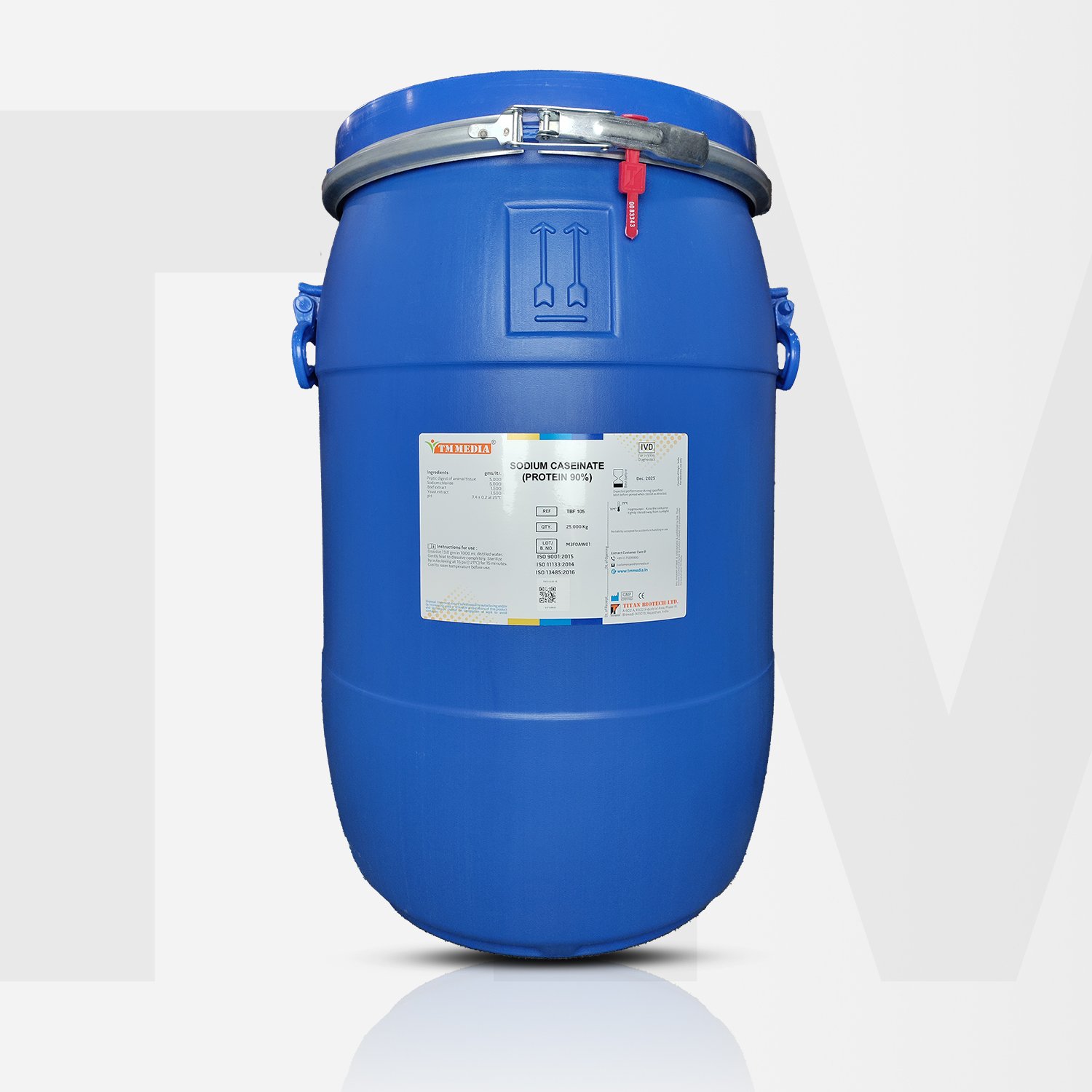
Sodium Caseinate is a fine, off-white, free-flowing powder, with no strong smell and distinct taste. And that is the beauty of it. It blends in, dissolves unevenly, and does not mess with the food’s original identity. It is the quiet platoon player that makes everyone additionally look good.
This is where it gets fascinating. sodium caseinate contains nearly 90% pure protein while keeping fat and lactose content very low. That is a big palm for people chasing high-protein, low-fat diets or those who need to cut down on lactose but still want the benefits of dairy proteins. There are some of its crucial figures:
It is not only functional, but also reliable, safe, and easy to work with.
Let’s be real, taste and texture are great, but safety is non-negotiable. sodium caseinate (Protein 90%) (TBF 105) from TM Media is tested under controlled conditions to make sure it is microbiologically safe. It is tested to make sure harmful bacteria like E. coli, Salmonella, and Staphylococcus aureus are not present. Even yeast and mold counts are also closely monitored to ensure they remain at a minimum level. Its main role is to improve product performance and to ensure food remains safe to eat. Key Microbial Specifications:
| PRODUCT PARAMETER | SPECIFICATION |
| Total viable count | NMT- 10,000cfu/g |
| Escherichia coli | Negative |
| Salmonella spp. | Negative |
| Staphylococcus aureus | Negative |
| Yeast & molds | 100cfu/g |
Sodium Caseinate (Protein 90%) (TBF 105) by TM Media marks all the boxes for quality standards and is tested to match international manufacturing practices. What you get is:
Sodium Caseinate may not be glamorous, but it is far and wide, working still to keep our foods delicate, stable, and satisfying. It is the reason your coffee creamer does not curdle, your protein bar does not deteriorate, and your ice cream does not turn into ice.
With TM Media’s sodium caseinate (Protein 90%), you are not just buying another food component, you are buying peace of mind. It is about quality, safety, and responsibility, all rolled into one unpretentious white powder.
A. No, it is not vegan, as it is deduced from milk.
A. It helps to make food creamy, smooth and harmonious. It is not just an emulsifier, it is also a stabilizer, helps keep fat and water stick together and giving dishes a livery, affable texture.
A. Both are deduced from milk, but their compositions are different. Sodium Caseinate is a protein that is slowly digested, so good for long term protein release, where whey protein is a fast acting protein and is often taken after post-workout.
A. If kept in a cold and dry environment, away from direct sun, it has a shelf life of 12–24 months since the production date.
A. It is generally considered as safe (GRAS) by food safety authorities similar as the FDA and is permitted for use in foods worldwide under strict quality norms.

In microbiology, good results depend not only upon the techniques used in the laboratory, but also on the state of...
Read More
Imagine being able to grow thousands of identical, healthy plants from one parent plant, all alike in quality, vigor, and...
Read More
In microbiology, not all bacteria can be cultured in the same environment. Their requirements are different, some need oxygen to...
Read More
Every microbiology laboratory has times when accuracy is more important than anything else. A urine sample arrives with a suspicion...
Read More
Managing the pH level was once considered an academic topic, discussed among the classrooms and laboratory manuals. Gradually, it became...
Read More
Modern medicine has changed a lot in the past few decades, especially with the rise of biological medicines. These drugs...
Read More