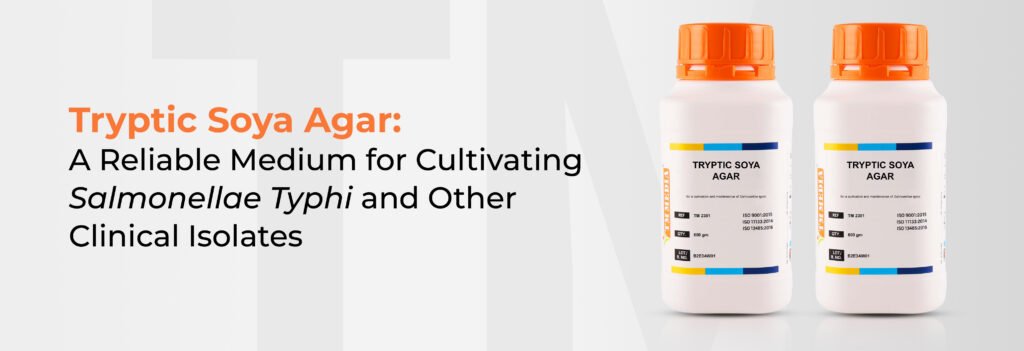
In every microbiology lab, there’s always that one moment when everything depends on a culture plate. Every once in a while, a sample comes in, a presumptive case of Salmonella Typhi and the team understands the diagnosis must be quick, accurate, and absolutely dependable. At that point, the quality of the medium becomes the deciding factor and that’s where Trypticase Soya Agar (tsa agar) steps in as the unsung hero.
Not like Selective media that are very limited in their applications. TSA Agar provides a reliable foundation and can be used to grow both fastidious and non-fastidious bacteria. For many microbiologists, it’s the trusted foundation they reach for when they need consistent results without compromise. From Clinical labs working to identify infections to research groups culturing bacterial strains, tsa agar is the quiet workhorse behind successful microbial retrieval.
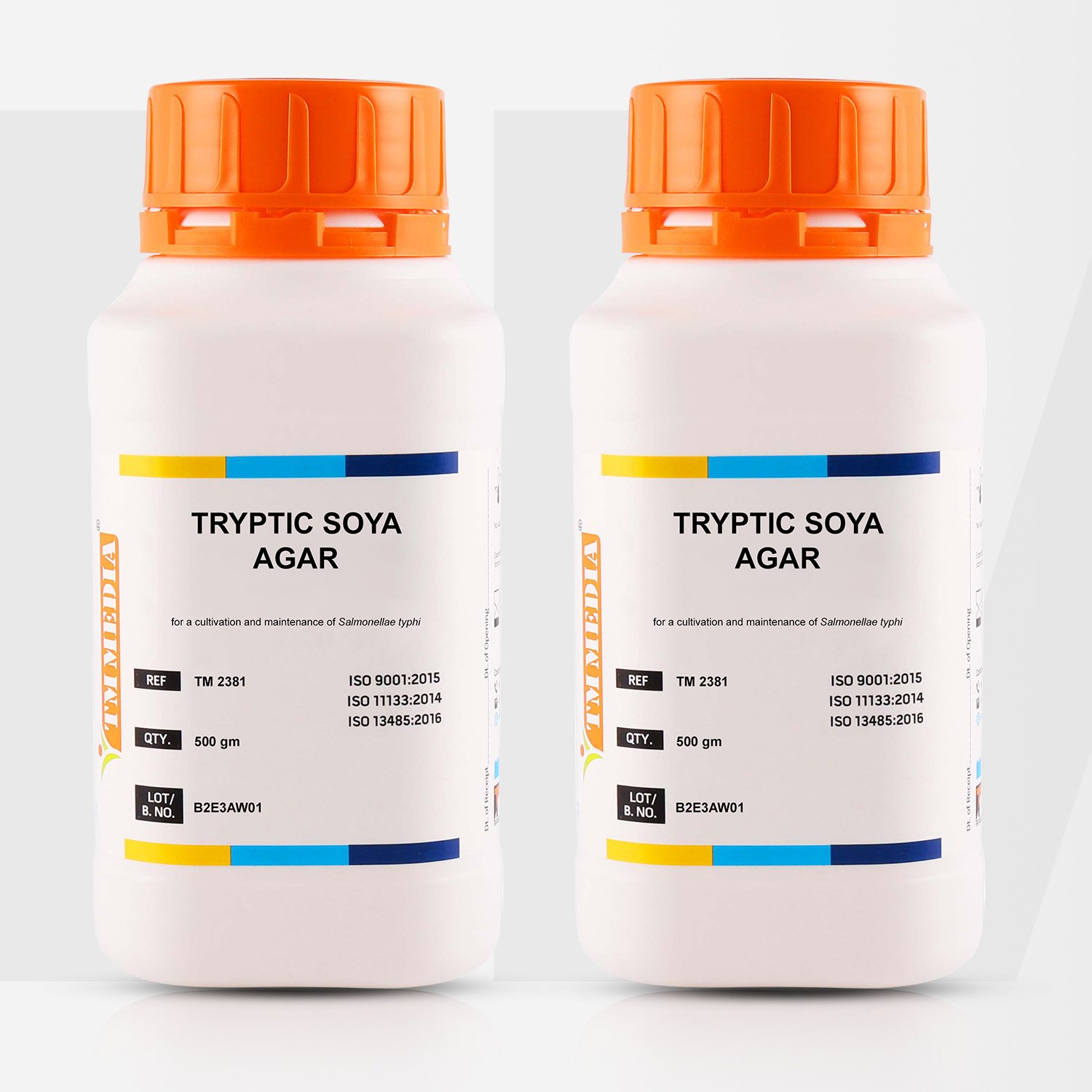
TSA Agar is a nutrient-rich medium that allows the growth of both fastidious and non-fastidious organisms. Due to its well-balanced nutritional components, TSA is also widely used for the growth of Salmonella, Listeria, Neisseria, Brucella and a number of other clinically significant organisms. The aim of most media is to be selective or differential, whereas TSA is usually intended for general-purpose isolation, growing, maintenance and stock preparation, making it an essential part of routine microbiological work.
In the clinical laboratory, TSA is the preferred medium for isolating and holding Salmonella Typhi when used in conjunction with an appropriate enrichment broth.
A strong medium is one that is prepared from high-quality ingredients. The Tryptic Soya Agar is composed of:
| Ingredients | g/L |
| Tryptone | 17.000 |
| Soya Peptone | 3.000 |
| Sodium Chloride | 5.000 |
| Dextrose (Glucose) | 2.500 |
| Dipotassium Hydrogen Phosphate | 2.500 |
| Agar | 15.000 |
These chemicals provide a balanced nutrient environment that allows for a wide range of bacterial growth.
The effectiveness of TSA depends on its intelligently designed nutrient matrix:
The components of TSA make a nutrient-rich, non-selective medium that supports growth of many bacteria, including Salmonella Typhi, which makes it a suitable medium for isolation, identification and preservation.
General instructions for preparing high-performance TSA Media are:
When solidified, the surface of TSA Media is smooth and has a light yellow colour, which is excellent for streaking or spreading culture samples.
Once inoculated and incubated, TSA usually shows:
| Microorganism | ATCC | Inoculum (CFU/ml) | Growth | Recovery | Incubation Temperature | Incubation Period |
| Salmonella Typhi | 6539 | 50-100 | Luxuriant | >=70% | 30-35°C | 18-24 Hours |
| Salmonella Typhimurium | 14028 | 50-100 | Luxuriant | >=70% | 30-35°C | 18-24 Hours |
Such predictable results ensure that the TSA Media can be relied on for day-to-day microbial maintenance.
When cultivating microbes, not all media are equally dependable. Tryptic Soya Agar (TM 2381) features:
For professionals working with cultures every day, TSA Media has become a reliable part of their workflow.
In microbiology, a reliable result starts with the medium and that consistency is given by the use of TSA Media. Its balanced nutrients and consistent growth support for both fastidious and non-fastidious organisms have made it a standard product in the clinical, research and pharmaceutical industries. For culture of Salmonella Typhi or for just routine cultures, TSA Media delivers excellence all along. If properly prepared, stored and quality controlled, this medium will be the favourite tool of those who enjoy accurate, reproducible and time-saving results in their daily workflow.
A. TSA itself does not make an anaerobic environment. In the case of anaerobes, TSA plates are incubated in anaerobic jars or chambers with oxygen-removing systems.
A. No, TSA Agar is a non-selective and non-differential medium.
A. Yes
A. No, it contains casein (from milk protein) and soya peptone. It is not vegan, but a lot of the components are Plant based.
A. TSA is the solid agar medium, and TSB is the liquid broth type that does not contain agar. TSB is used for enrichment culture and liquid suspensions, whereas TSA is for isolation and colony examination on plates.

In microbiology, good results depend not only upon the techniques used in the laboratory, but also on the state of...
Read More
Imagine being able to grow thousands of identical, healthy plants from one parent plant, all alike in quality, vigor, and...
Read More
In microbiology, not all bacteria can be cultured in the same environment. Their requirements are different, some need oxygen to...
Read More
Every microbiology laboratory has times when accuracy is more important than anything else. A urine sample arrives with a suspicion...
Read More
Managing the pH level was once considered an academic topic, discussed among the classrooms and laboratory manuals. Gradually, it became...
Read More
Modern medicine has changed a lot in the past few decades, especially with the rise of biological medicines. These drugs...
Read More