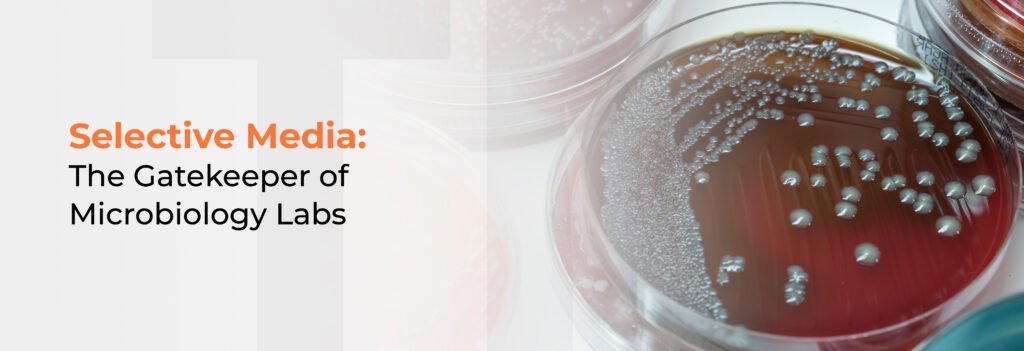
Have you ever thought about how some microbiologists are able to pick out one type of bacteria from a mixture that has hundreds of different species? The answer is Selective Media, one of the most powerful microbiological tools. These specialized Culture Media act as selective agents for the growth of a specific group of microorganisms and the inhibition of others.
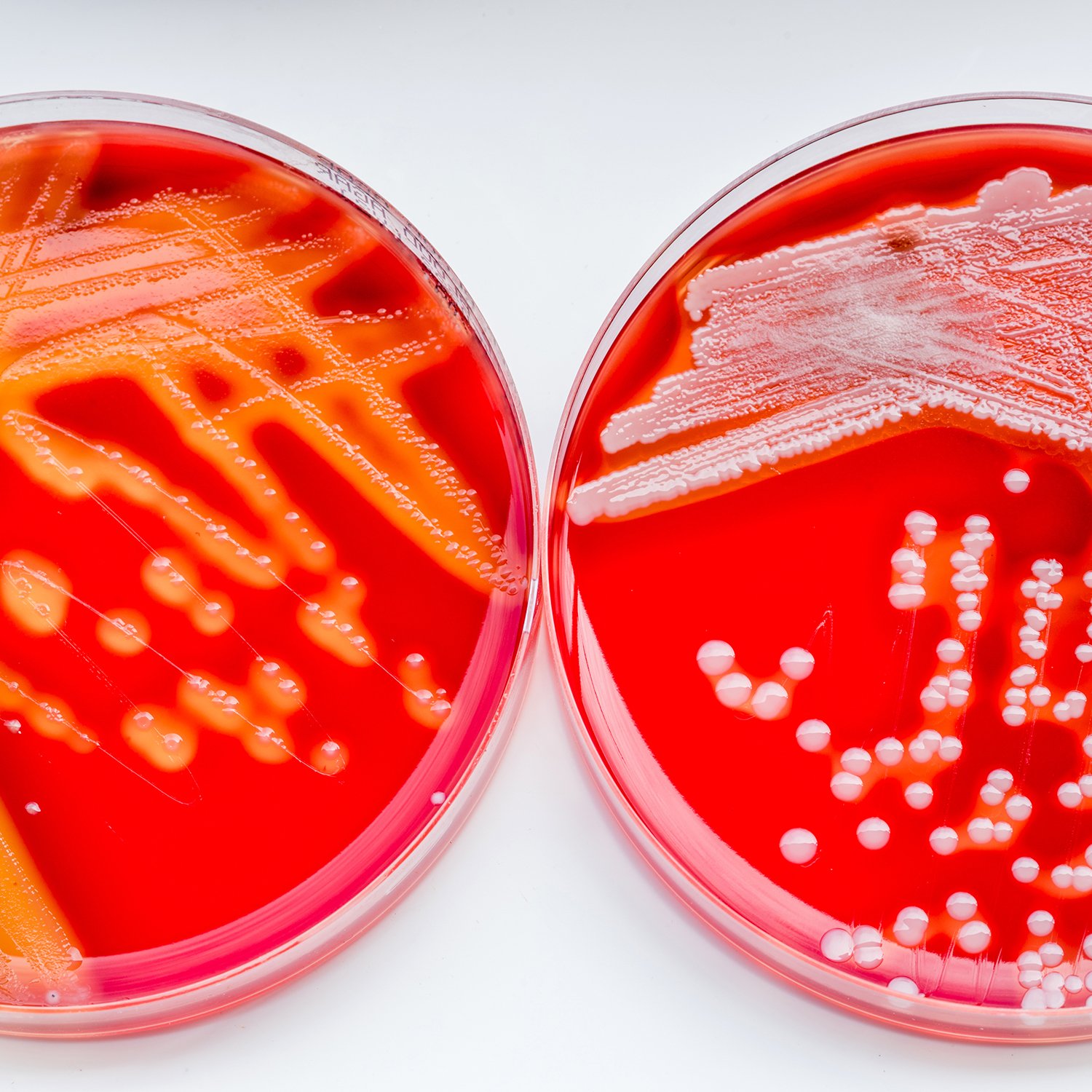
Selective Media are culture media designed with specific ingredients that create an environment favorable for target microorganisms while suppressing unwanted ones. Consider it a VIP club where only guests with the proper paperwork are allowed in. These credentials could be resistance to certain types of antibiotics, tolerance to high salt concentrations, or the ability to survive in the presence of particular chemical compounds.
The secret of Selective Media was in its ingredients. Several selective compounds like antibiotics, dyes, bile salts and pH, were used to select a media that allows the growth of the desired bacteria. This enables very efficient isolation of target organisms from mixed cultures and has saved countless hours of labor in the lab.
Although Selective Media determines which organisms can grow, its role is very different from differential media. Selective Media blocks unwanted microbes, while differential media allows different organisms to grow but separates them through visible changes. For example, a selective medium like MacConkey Agar inhibits the growth of gram-positive bacteria and supports only the growth of gram-negative bacteria. On the other hand, a differential medium allows the growth of multiple species simultaneously and differentiates these species on the basis of visible reactions, such as lactose fermenters appearing as pink colonies and non-fermenters as colourless. This difference also emphasizes that clean isolation is facilitated by selective plates, whereas differential plates reveal metabolic characteristics within a mixed culture.
Many modern Culture Media have both features, functioning as Selective and Differential Media at the same time. This combination of features allows a microbiologist to get the most information from one culture plate.
Selective Media often works better than differential media when isolation is the main goal. Many samples like soil, food, water, or clinical swabs, are heavily contaminated with micro-organisms and the isolation of a single target species is a difficult procedure. Selective Media filters out that noise by inhibiting unwanted microbes and letting only the target organism grow. This provides Selective Media an advantage when:
Differential media can differentiate organisms visually based on their biochemical activity, but it does not stop bacteria growing in the background. This often results in overgrown, chaotic plates. Selective Media Provides a clean environment with minimum competition and maximum isolation efficiency. That is why this medium is the medium of choice when purity or focused detection is critical.
So let’s look at some typical Selective Media that you will see in any Microbiology lab:
These media make the isolation easier by selectively allowing only certain groups of microbes to grow and enable microbiologists to isolate, recover, and identify certain organisms from mixed samples.
Differential media are used to differentiate one microorganism from another based on their biochemical properties; this can be observed even when more than one species grows on a plate. Common examples include:
These media allow the microbiologist to examine organisms by their reaction patterns or as they change color, which enable microbiologists to investigate organisms according to their metabolic behavior.
Despite development in molecular diagnostics and automated identification systems, Selective Media is still the cornerstone of microbiology. They offer cost-effective solutions, provide rapid preliminary results, and allow isolation of pure bacterial cultures that can be tested for antibiotic susceptibility or subjected to other investigations.
The beauty of this media is its simplicity and dependability. An appropriate Selective Media plate can reveal important information in 24 hours, guiding treatment decisions in the hospital or identifying the source of contamination in a food processing facility.
Selective Media is one of microbiology’s most elegant answers to a tricky problem: finding a needle in a haystack of bacteria. By creating conditions that permit growth only of the organism of interest. These specialised Culture Media have revolutionised the way we identify bacteria and they are still an essential part of the laboratory worldwide.
Whether new or experienced in the field of clinical diagnostics, knowing how Selective Media works gives you an edge that enables you to identify microbes more quickly and with greater confidence. Those colorful colonies you see growing on your agar plates are not just for decoration, they are stories of survival, narratives of adaptation and incredible selectivity that makes modern microbiology possible.
A. No, while these are frequently applied for bacterial isolation, Selective Media can be designed for fungi, yeasts and even certain groups of protozoa, depending on the selective substances used.
A. They can, but accuracy is important. Making Selective Media is a matter of measuring chemicals, maintaining sterility and knowing what concentration of each chemical to add. Many small labs use ready-to-use media to ensure uniformity.
In either case results are going to be unreliable. Accurate formulation is crucial..
A. Yes, Selective Media is needed to get pure isolation for biochemical testing, for investigating microbial behavior, and for maintaining reference cultures; none of these responsibilities can be undertaken by molecular tools.
A. Environmental samples are associated with diverse microorganisms. Differential media do not inhibit undesirable organisms, and fast-growing organisms can overgrow the plate. Selective Media prevents this by eliminating non-targets so screening is feasible.

In microbiology, good results depend not only upon the techniques used in the laboratory, but also on the state of...
Read More
Imagine being able to grow thousands of identical, healthy plants from one parent plant, all alike in quality, vigor, and...
Read More
In microbiology, not all bacteria can be cultured in the same environment. Their requirements are different, some need oxygen to...
Read More
Every microbiology laboratory has times when accuracy is more important than anything else. A urine sample arrives with a suspicion...
Read More
Managing the pH level was once considered an academic topic, discussed among the classrooms and laboratory manuals. Gradually, it became...
Read More
Modern medicine has changed a lot in the past few decades, especially with the rise of biological medicines. These drugs...
Read More