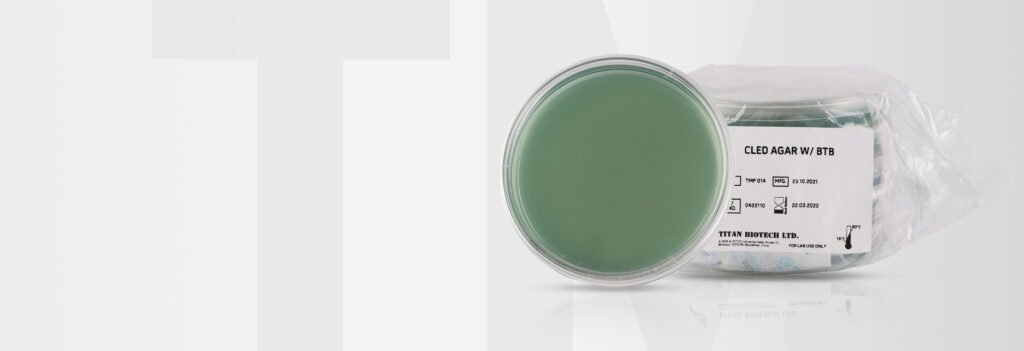
Every microbiology laboratory has times when accuracy is more important than anything else. A urine sample arrives with a suspicion of urinary tract infection, and the culture needs to be clean, easy to read and reliable. That’s where the choice of medium becomes crucial. This is where CLED Agar silently earns itself a place in the routine diagnostic microbiology.
Unlike selective media that inhibit growth of bacteria, CLED Agar is a nutritionally balanced medium which supports the growth of the majority of urinary pathogens and also avoids common complications such as Proteus swarming. For microbiologists who are handling urine cultures daily, this medium is a reliable choice. It helps achieve uniform colony growth.
From hospital laboratories that need to process large numbers of samples to diagnostic centers focusing on accuracy, CLED Agar is a reliable foundation for urinary bacteriology.
CLED Agar is a differential, non-selective culture medium primarily employed for the isolation and enumeration of bacteria in urine.
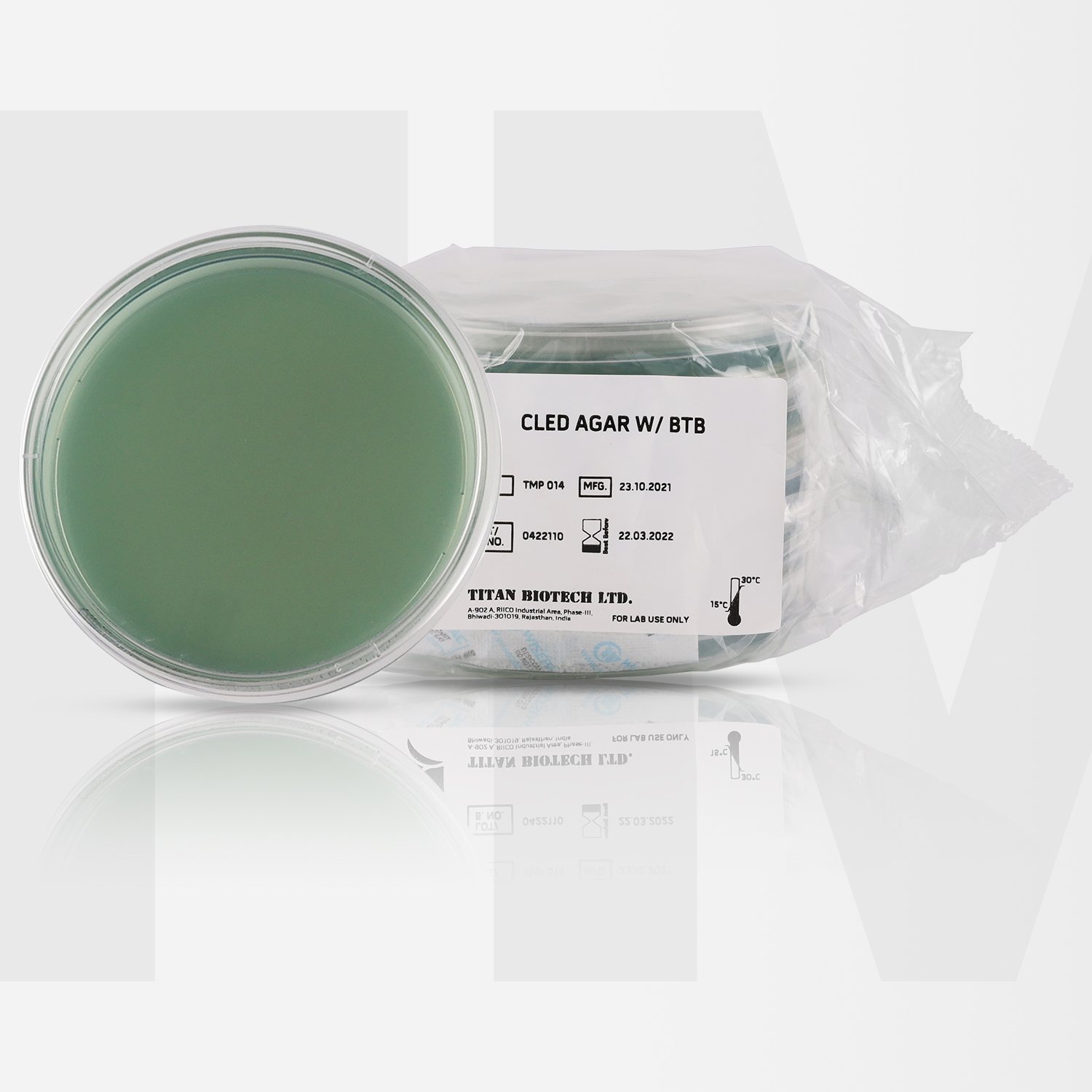
The CLED Agar full form is Cystine Lactose Electrolyte Deficient Agar, it is the name that describes the purpose of the culture medium. This medium is used to grow Gram-positive and Gram-negative organisms that are typically associated with urinary tract infections. Lactose fermenters and non-lactose fermenters are separated by lactose fermentation and the electrolyte-deficient formulation inhibits swarming of Proteus spp., which results in well isolated colonies. Because of these characteristics, it is employed as a general purpose medium for the processing of urine culture in the clinical microbiology laboratory.
The reliability of CLED Agar comes from its carefully selected ingredients that create a nutritionally supportive yet controlled environment.
| Ingredients | g/L |
| Agar | 15.000 |
| Lactose | 10.000 |
| Peptic digest of animal tissue | 4.000 |
| Casein enzymatic hydrolysate | 4.000 |
| Beef extract | 3.000 |
| L-Cystine | 0.128 |
| Bromothymol blue | 0.020 |
All the components contribute to the growth, differentiation, and clarity required for accurate interpretation of urinary pathogens.
The working principle of CLED Media is based on selective nutrient balance and differential indicators:
All of these factors make it a convenient and effective medium for urine bacteriology.
For optimal performance of CLED Agar, standard preparation steps should be followed:
Once solidified, it looks greenish because of the bromothymol blue indicator and it gives a flat surface for streaking of the urine sample.
After incubation, CLED Agar allows clear visual differentiation of organisms based on lactose fermentation:
| Microorganism | ATCC | Inoculum (CFU/ml) | Growth | Recovery | Appearance of colony | Incubation Temperature | Incubation Period |
| Escherichia coli | 25922 | 50-100 | Luxuriant | >=70% | Yellow, opaque, centre slightly deeper yellow | 35-37 ֯C | 18-24 Hours |
| Staphylococcus aureus | 25923 | 50-100 | Luxuriant | >=70% | Deep yellow | 35-37 ֯C | 18-24 Hours |
| Proteus vulgaris | 13315 | 50-100 | Luxuriant | >=70% | Blue | 35-37 ֯C | 18-24 Hours |
| Salmonella typhi | 6539 | 50-100 | Luxuriant | >=70% | Blue | 35-37 ֯C | 18-24 Hours |
| Enterococcus faecalis | 29212 | 50-100 | Luxuriant | >=70% | Slight yellow or green | 35-37 ֯C | 18-24 Hours |
| Klebsiella pneumoniae | 13883 | 50-100 | Luxuriant | >=70% | Yellow to whitish blue | 35-37 ֯C | 18-24 Hours |
Such predictable results make it suitable for routine diagnostic workflows.
Among the many CLED Agar uses, the most prominent is routine urine culture testing. The medium is widely applied for:
Because of its clarity and consistency, CLED Agar continues to be recommended for primary isolation in urinary bacteriology.
Not all Culture Media give uniform results. CLED Agar (TMP 014) is designed to meet the needs of routine diagnostic laboratory:
Reliable performance was essential for laboratories that process urine samples on a daily basis. CLED Agar from TM Media delivers accurate diagnosis with no compromise.
In microbiology, dependable diagnosis starts with the correct Culture Medium. CLED Agar is a trusted medium for urine culture. It has a balanced formulation, clearly differentiates bacteria, and inhibits Proteus swarming. It supports a wide range of urinary pathogens while maintaining clarity, making it indispensable in clinical laboratories.
When prepared, stored, and used properly, it gives consistent results that support accurate clinical decisions. This medium remains a reliable and easy choice for routine urinary bacteriology in diagnostic microbiology.
A. It is rarely added with antibiotics. Adding antimicrobial agents could influence its differential characteristic and recovering yields might be altered.
A. No
A. Prolonged incubation may alter the appearance of the colonies or result in colour changes due to metabolic alterations. To avoid misinterpretation, observe within the recommended incubation time of 18-24 hours.
A. Yes, the deficiency of electrolytes prevents Proteus swarming.
A. Effectiveness may be influenced by inadequate sterilization, poor preparation, dehydration of plates or by using expired media.

In microbiology, good results depend not only upon the techniques used in the laboratory, but also on the state of...
Read More
Imagine being able to grow thousands of identical, healthy plants from one parent plant, all alike in quality, vigor, and...
Read More
In microbiology, not all bacteria can be cultured in the same environment. Their requirements are different, some need oxygen to...
Read More
Managing the pH level was once considered an academic topic, discussed among the classrooms and laboratory manuals. Gradually, it became...
Read More
Modern medicine has changed a lot in the past few decades, especially with the rise of biological medicines. These drugs...
Read More